

Let’s have an honest conversation — the kind your doctor probably doesn’t have time for. You hit your 30s, life gets busier, and somewhere between the work deadlines, the family dinners, and the Netflix binges, your health quietly starts to shift. Your clothes fit a little differently. You feel more tired than you used to. And maybe, just maybe, your last doctor’s visit came with a raised eyebrow and a note about your blood pressure being ‘a little elevated.’
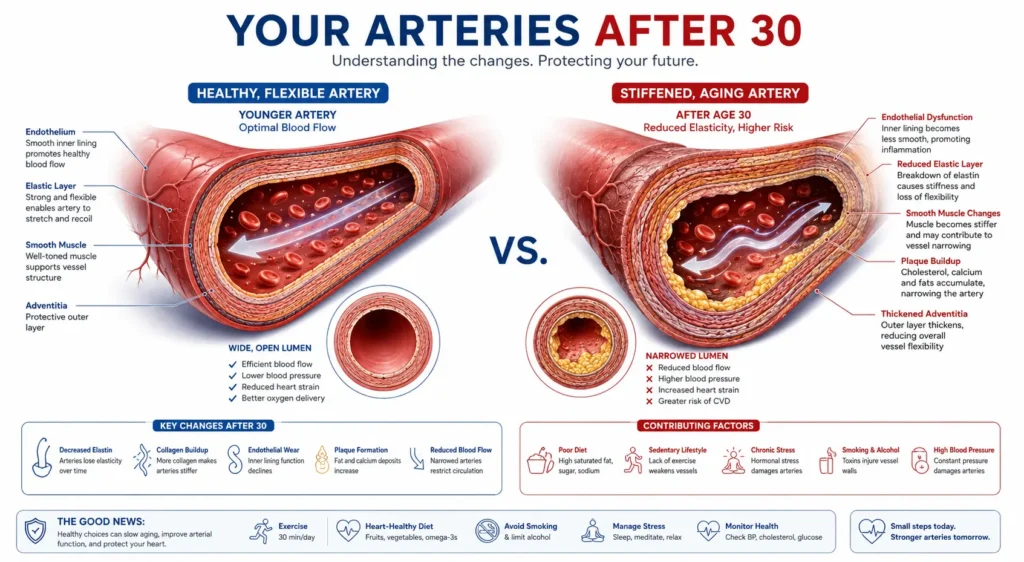
Here’s the thing: you’re not imagining it, and you’re definitely not alone. The science is clear — once you pass 30, your body begins a gradual but meaningful physiological shift. Arteries stiffen slightly. Hormones fluctuate. Stress accumulates. Metabolism slows. All of these changes quietly conspire to push your blood pressure in the wrong direction, often before you even notice symptoms.
But here’s what most articles won’t tell you: this isn’t inevitable. Blood pressure issues in your 30s are largely lifestyle-driven, which means they’re largely reversible. This guide is going to walk you through exactly what is happening inside your body after 30, why blood pressure becomes such a critical health marker during this decade, how weight gain is directly tied to cardiovascular risk, and — most importantly — what you can actually do about it today. No scare tactics. Just science, clarity, and practical action.
| KEY TAKEAWAYS |
| • Blood pressure naturally tends to rise after 30 due to arterial stiffening, hormonal changes, and accumulated lifestyle factors. |
| • Hypertension is called the ‘silent killer’ because it rarely produces noticeable symptoms until serious damage has occurred. |
| • Weight gain after 30 is directly linked to increased blood pressure — even a 10-lb gain can raise systolic pressure by 4–5 mmHg. |
| • Chronic stress, poor sleep, excess sodium, and low physical activity are the four biggest controllable risk factors in your 30s. |
| • Evidence-based lifestyle changes — diet, exercise, sleep, and stress management — can reduce systolic blood pressure by 10–20 mmHg. |
| • Certain supplements and dietary tools, when used correctly, can meaningfully support cardiovascular health in this age group. |
Table of Contents
1. Why Blood Pressure Changes After 30 — The Science
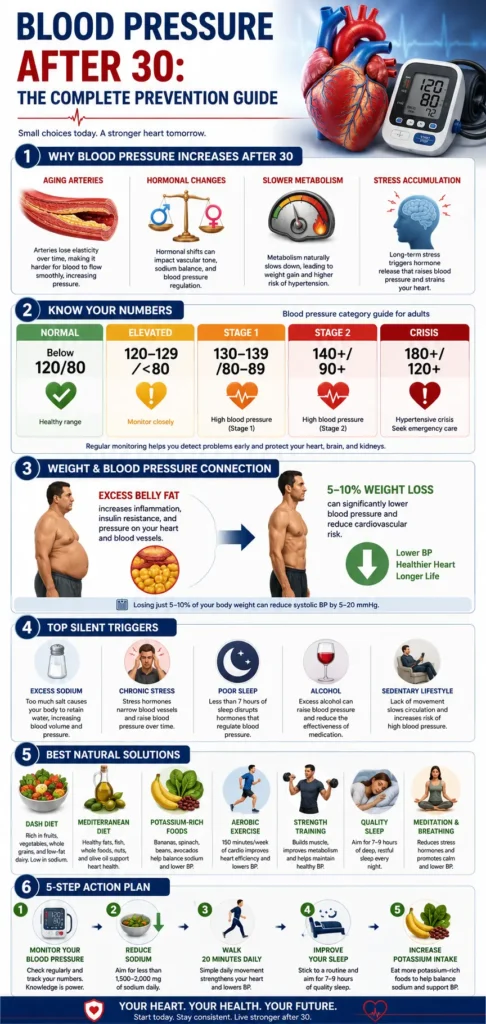
To understand why your blood pressure starts creeping up in your 30s, you need a quick biology refresher. Blood pressure is simply the force your blood exerts against the walls of your arteries as your heart pumps it around your body. Two numbers tell the story: systolic pressure (the force during a heartbeat) and diastolic pressure (the force between beats). A healthy reading sits at or below 120/80 mmHg.
After 30, several simultaneous biological processes begin to work against that ideal number. First, your arteries gradually lose some of their youthful elasticity. Arterial stiffness — a process driven by changes in collagen and elastin proteins in the vessel walls — means your heart has to work harder to push blood through. Think of trying to squeeze water through a garden hose versus a rigid plastic pipe. The heart compensates with more force, and blood pressure rises.
Second, hormonal shifts play a role that’s often underappreciated. In women, estrogen has a protective effect on blood vessels, promoting flexibility and reducing inflammation. As estrogen levels fluctuate through the late 30s and into perimenopause, that protection weakens. In men, declining testosterone is associated with increased body fat — particularly visceral (belly) fat — which is one of the most potent drivers of hypertension.
Third, the autonomic nervous system — the system controlling heart rate and blood vessel tension — becomes slightly less efficient at responding to stress and fluctuations in the 30s. This means blood pressure recovery after a stressful event takes longer, and the cumulative cardiovascular cost of daily stress becomes more significant. Add a decade of suboptimal sleep, processed food, and reduced physical activity to the mix, and you have a recipe for hypertension that shows up seemingly out of nowhere on your routine checkup.
2. Understanding Your Numbers: What the Readings Actually Mean
If your doctor has mentioned your blood pressure lately, knowing exactly what those numbers represent — and what the thresholds mean — arms you with genuine understanding rather than vague anxiety. Blood pressure is measured in millimeters of mercury (mmHg) and expressed as two numbers: systolic over diastolic.
| Blood Pressure Category | Reading |
| Normal | Below 120/80 mmHg |
| Elevated | 120–129 / less than 80 mmHg |
| High Blood Pressure Stage 1 | 130–139 / 80–89 mmHg |
| High Blood Pressure Stage 2 | 140+ / 90+ mmHg |
| Hypertensive Crisis | 180+ / 120+ mmHg — seek care immediately |
What makes hypertension particularly insidious is that it produces almost no symptoms in its early stages — which is precisely why it earned the nickname ‘the silent killer.’ You can have Stage 1 hypertension for years without a headache, chest pain, or any red flag that signals something is wrong. Meanwhile, that chronic elevated pressure is quietly damaging the inner lining of your arteries, straining your heart, taxing your kidneys, and increasing your stroke risk.
For adults in their 30s, the most important thing to understand is that ‘elevated’ blood pressure — the 120–129 range — is not normal, even though it falls short of the hypertension threshold. Research published in journals like Hypertension and JAMA Cardiology consistently shows that cardiovascular risk begins increasing in this elevated range, especially when combined with other risk factors like excess weight, smoking, or a sedentary lifestyle.
Getting your blood pressure checked regularly — at least once per year if readings are normal, more frequently if elevated — is genuinely one of the highest-return health investments you can make in your 30s. Home monitors have become inexpensive and highly accurate, and checking your pressure in the calm of your own home (away from ‘white coat’ anxiety) often gives a clearer picture than an office reading.
3. The Weight-Blood Pressure Connection You Can’t Ignore
Weight loss after 30 and blood pressure management are not two separate health projects. They are deeply, mechanically linked — and understanding that connection can be the motivational bridge that makes both goals feel more achievable at the same time. The relationship between excess body weight and elevated blood pressure is one of the most robustly established findings in all of cardiovascular medicine.
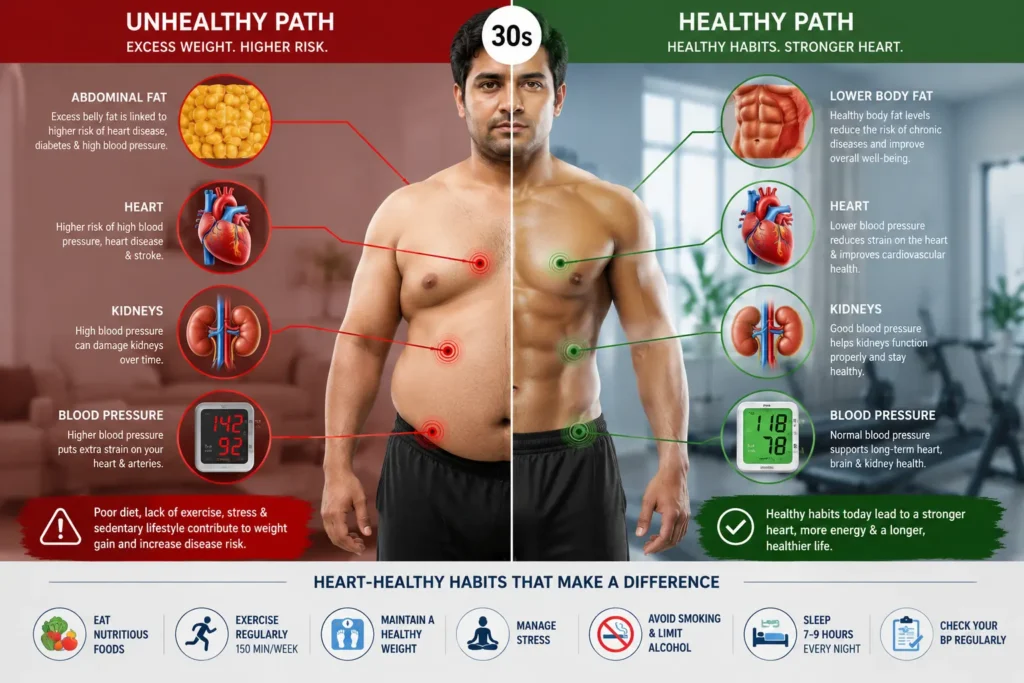
Here is the core mechanism: excess adipose tissue (body fat), especially the visceral fat stored deep in the abdomen around your organs, is metabolically active. It releases inflammatory hormones and signals the kidneys to retain more sodium. Sodium retention increases blood volume. Greater blood volume means more pressure pushing against arterial walls. Additionally, excess weight forces the heart to pump harder to supply oxygen to a larger body mass, directly elevating both systolic and diastolic pressure. Research suggests that for every 10 pounds of excess weight, blood pressure rises by approximately 4–5 mmHg systolic — meaning a 20-pound weight gain could nudge someone from a normal reading straight into Stage 1 hypertension territory.
The encouraging flip side is equally powerful: weight loss has a dramatic, dose-dependent effect on blood pressure reduction. Studies consistently show that losing just 5–10% of body weight produces clinically meaningful decreases in blood pressure, with some research showing reductions of 8–14 mmHg systolic from moderate weight loss combined with dietary changes. For context, a drop of 10 mmHg systolic is roughly equivalent to the effect of a first-line blood pressure medication. That’s how powerful this lever is.
The distribution of fat matters enormously too. Waist circumference — not just the number on the scale — is a critical cardiovascular risk indicator. Men with a waist circumference above 40 inches and women above 35 inches are at significantly elevated risk for hypertension and related metabolic conditions. If you’re in your 30s and your waist measurement has been creeping upward, that single metric deserves your immediate attention more than almost any other health indicator.
4. Lifestyle Triggers That Silently Raise Your Blood Pressure
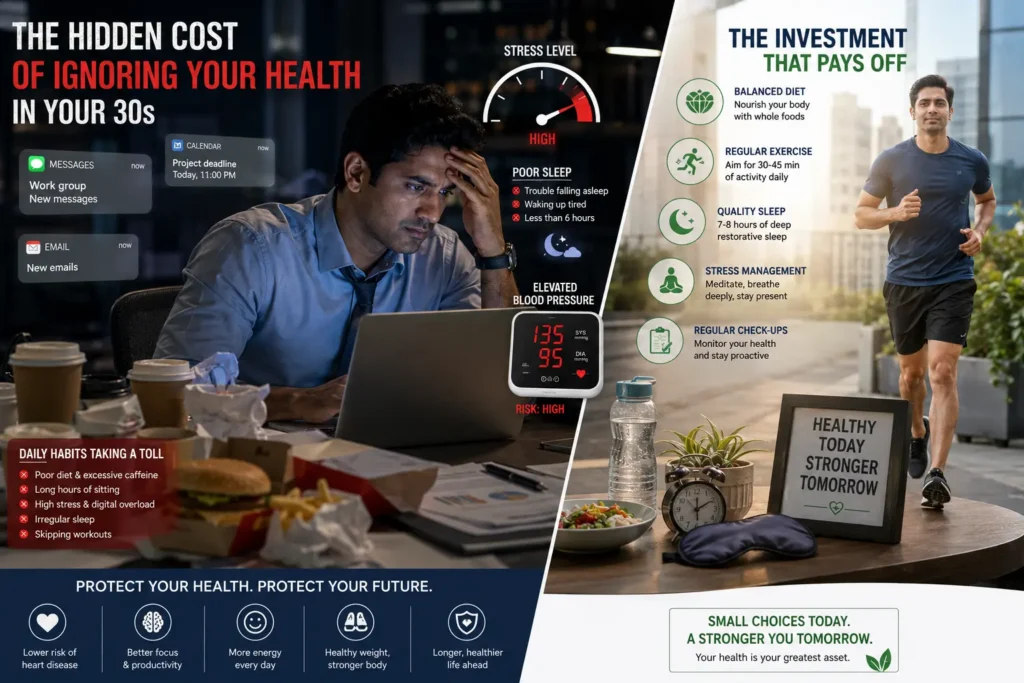
Most people in their 30s aren’t eating fast food every meal or living completely sedentary lives — yet their blood pressure climbs anyway. That’s because the real culprits are often subtle, cumulative lifestyle patterns that accumulate over years rather than dramatic bad habits. Here’s an honest look at what’s most likely driving elevated readings in the under-40 crowd.
Excess Sodium — The Hidden Threat
The average American consumes roughly 3,400 mg of sodium per day — more than double the 1,500 mg recommended for people with elevated blood pressure risk. The sneaky part is that most of this sodium doesn’t come from the salt shaker — it comes from processed foods, restaurant meals, bread, condiments, canned soups, and deli meats. Sodium causes the kidneys to retain water, increasing blood volume and — predictably — blood pressure. In sodium-sensitive individuals (which research suggests may be a majority of people with hypertension), even modest reductions in sodium intake produce measurable drops in pressure.
Chronic Stress and the Cortisol Cascade
Stress is not just an emotional experience — it’s a physiological one with direct cardiovascular consequences. When you’re chronically stressed (which, let’s be honest, describes the vast majority of people in their 30s juggling careers, relationships, children, and financial pressure), your body runs a near-continuous low-level stress response. Cortisol and adrenaline keep your heart rate elevated, your blood vessels constricted, and your blood pressure higher than baseline. Over time, this chronic activation wears on the cardiovascular system in ways that show up clearly in blood pressure readings.
Sleep Deprivation — The Overlooked Driver
Sleep is when your cardiovascular system gets its deepest recovery. During healthy sleep, blood pressure naturally dips by 10–20% — a phenomenon researchers call ‘nocturnal dipping.’ People who chronically sleep fewer than 6 hours per night are significantly more likely to have hypertension and to miss this restorative dip, meaning their cardiovascular system never fully de-stresses. In your 30s, when sleep often gets sacrificed for productivity or entertainment, this is a genuinely underappreciated cardiovascular risk factor.
Alcohol Consumption
Having a drink or two to unwind is a common pattern in the 30s, and while light drinking is associated with minimal cardiovascular impact in many studies, drinking three or more drinks per day raises blood pressure consistently. Alcohol stimulates the release of stress hormones, disrupts the autonomic nervous system’s blood pressure regulation, and contributes to weight gain — all of which converge on elevated cardiovascular risk. If you’re in the habit of multiple drinks most evenings, this is almost certainly affecting your readings.
Sedentary Behavior
Physical activity is one of the most powerful regulators of blood pressure available to us without a prescription. Regular aerobic exercise makes the heart more efficient, improves arterial flexibility, helps manage weight, and reduces the hormonal stress response. Conversely, a largely sedentary lifestyle — characterized by desk work, limited walking, and minimal structured exercise — allows all the physiological risk factors to accumulate unchecked. Notably, it’s not just formal exercise that matters; research increasingly shows that breaking up long periods of sitting throughout the day has independent cardiovascular benefits.
5. Diet Strategies That Actually Move the Needle
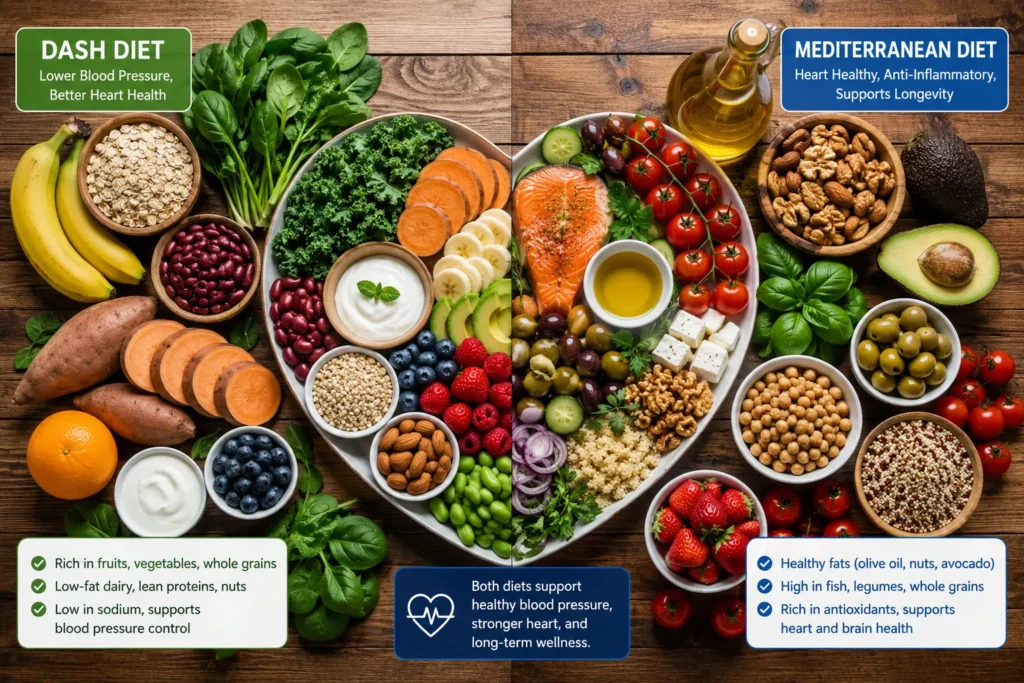
If you want to get serious about managing blood pressure after 30, your diet is the most powerful non-pharmacological tool available. The evidence base here is exceptional — decades of rigorous research across enormous study populations — and the good news is that the changes that most effectively lower blood pressure are also the changes that most effectively support weight loss after 30. These goals are completely aligned.
The most comprehensively studied dietary approach for blood pressure is the DASH diet — Dietary Approaches to Stop Hypertension. Developed specifically to address hypertension without medication, the DASH diet has been shown in multiple large clinical trials to lower systolic blood pressure by 8–14 mmHg. The diet’s core principles are straightforward: emphasize vegetables, fruits, whole grains, lean proteins, and low-fat dairy; limit sodium, saturated fats, added sugars, and red meat; and prioritize high-potassium foods like bananas, sweet potatoes, spinach, and avocados.
Potassium deserves a special mention here because it is probably the most under-appreciated dietary mineral in blood pressure management. Potassium acts in direct opposition to sodium in the body — it relaxes blood vessel walls and helps the kidneys excrete excess sodium. Most Americans are substantially deficient in potassium while oversupplied with sodium, and reversing that ratio has a dramatic effect on blood pressure. Target-rich foods include leafy greens, legumes, potatoes, bananas, and most whole fruits and vegetables.
Beyond DASH, the Mediterranean dietary pattern — rich in olive oil, fish, whole grains, legumes, nuts, and vegetables — has accumulated strong cardiovascular evidence in its own right. The combination of anti-inflammatory omega-3 fatty acids from fish, polyphenols from olive oil and plant foods, and high fiber content appears to benefit both blood pressure and arterial health through multiple simultaneous mechanisms. For people in their 30s looking for a sustainable, evidence-based eating pattern they can maintain long-term, the Mediterranean approach has an excellent track record of adherence and outcomes.
Practical changes that matter: reduce restaurant meals (which are typically enormous sodium bombs), cook at home more often using herbs and spices instead of salt for flavor, replace processed snacks with whole foods, increase your vegetable servings to at least 4–5 per day, and choose water or unsweetened beverages over sodas and juices. None of this requires perfection — consistent improvement over time is what produces results.
6. Exercise, Sleep & Stress: The Cardiovascular Trifecta
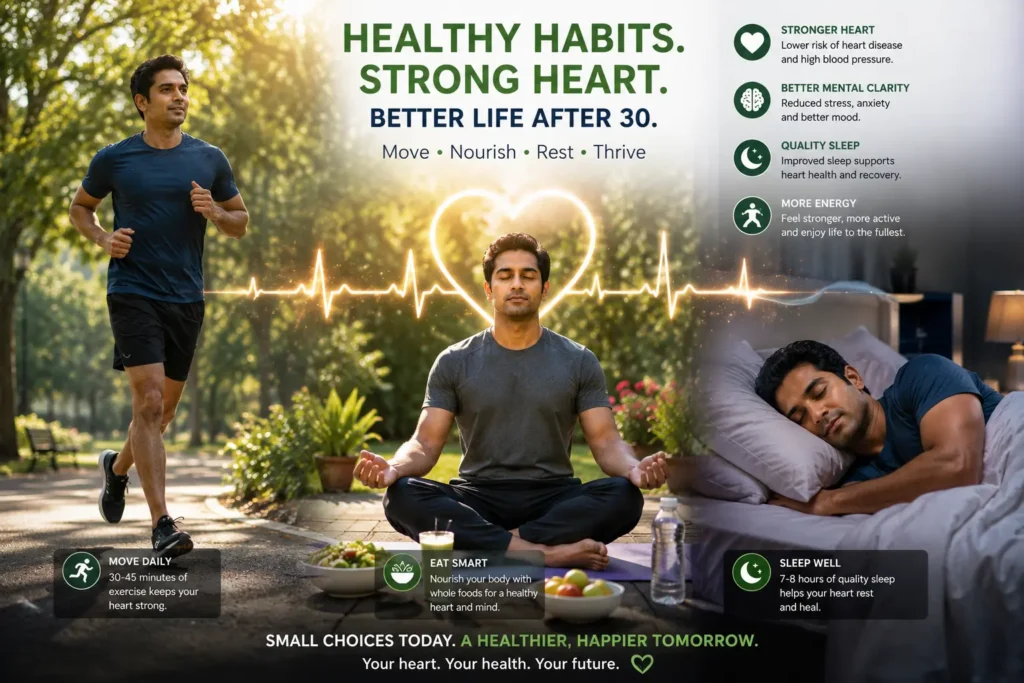
Diet gets most of the attention in conversations about blood pressure management, but the evidence for exercise, sleep, and stress reduction is equally compelling. When you optimize all three simultaneously, the cumulative effect on blood pressure can rival the impact of medication for many people in the early stages of hypertension.
Exercise: Your Most Powerful Cardiovascular Prescription
Regular aerobic exercise — meaning any sustained activity that elevates your heart rate for 30 or more minutes — is one of the most effective blood pressure-lowering interventions we know of. The American Heart Association recommends at least 150 minutes of moderate-intensity aerobic exercise per week. Studies show this level of activity can reduce systolic blood pressure by an average of 5–8 mmHg, with some individuals experiencing reductions of 10 mmHg or more. Walking, cycling, swimming, dancing, jogging — the specific activity matters far less than the consistency. If formal exercise feels daunting, start with 20-minute brisk walks and build gradually.
Resistance training adds complementary benefits. Building muscle mass improves metabolic efficiency, helps maintain a healthy weight after 30 (when muscle mass naturally begins to decline), and has been shown in multiple meta-analyses to produce modest but meaningful reductions in blood pressure independent of aerobic training. A combination program that includes 2–3 days of strength work alongside aerobic exercise appears to be the optimal approach for both cardiovascular health and body composition.
Sleep: The Non-Negotiable Recovery Window
Seven to nine hours of quality sleep per night isn’t a luxury — it’s a cardiovascular necessity. During the deeper stages of sleep, the body repairs arterial tissue, regulates stress hormones, and achieves the blood pressure dip that protects the heart during waking hours. Chronically short or poor-quality sleep disrupts all of these processes. If you’re consistently sleeping under 7 hours, improving your sleep is arguably the single highest-priority intervention for your cardiovascular health. Sleep hygiene basics — consistent sleep/wake timing, a dark and cool bedroom, no screens for 30–60 minutes before bed, and limiting caffeine after noon — can produce meaningful improvements in sleep quality within 2–3 weeks.
Stress Reduction: The Underrated Medicine
Managing stress in your 30s isn’t just about feeling better day-to-day — it’s a direct cardiovascular intervention. Mindfulness-based stress reduction (MBSR), regular meditation, yoga, and even consistent social connection have all been shown in clinical research to reduce blood pressure. The mechanism is hormonal: these practices reduce circulating cortisol and adrenaline levels, lower sympathetic nervous system activity, and allow the parasympathetic ‘rest-and-digest’ system to dominate. Even 10 minutes of daily deep breathing or body-scan meditation has demonstrated blood pressure benefits in controlled trials. It is one of the most dramatically under-utilized tools in preventive cardiovascular care.
7. Common Mistakes People Make With Blood Pressure Management
| WATCH OUT FOR THESE COMMON PITFALLS |
| • Relying on occasional readings instead of tracking trends: A single blood pressure reading is far less informative than a pattern of readings taken across different times of day. Many people either catastrophize a single high reading taken after rushing to an appointment, or dismiss a high reading as a fluke. Track readings at home over 2–3 weeks to get an accurate picture. |
| • Treating it as a weight problem only: While excess weight is a powerful driver of hypertension, some people in their 30s with healthy BMIs still develop elevated blood pressure due to stress, sodium intake, genetics, or sedentary behavior. Never assume you’re safe because your weight is normal. |
| • Going all-or-nothing with dietary changes: Drastic dietary overhauls are typically unsustainable. The research shows that gradual, consistent changes — even modest sodium reduction, incremental vegetable increases, or switching to whole grains — produce real, lasting results. Perfection is the enemy of progress. |
| • Ignoring medication when genuinely needed: Lifestyle interventions are powerful, but they have limits. Stage 2 hypertension or Stage 1 hypertension with additional cardiovascular risk factors often requires medication alongside lifestyle changes. Refusing or postponing medication out of a desire to ‘handle it naturally’ when readings are genuinely elevated can allow cumulative damage to accumulate over months or years. |
| • Underestimating the cardiovascular cost of stress: Most people in their 30s intellectually accept that stress is bad for them — then do nothing about it because it feels less concrete than diet or exercise. Chronic psychological stress directly elevates blood pressure through neuroendocrine pathways. Treating stress management as optional is a mistake with measurable physiological consequences. |
| • Forgetting that alcohol and caffeine both affect readings: Having two or three drinks the evening before a morning blood pressure check, or drinking multiple cups of coffee before measuring, will produce artificially elevated readings. For accurate monitoring, measure after a period of rest and avoid both substances for at least an hour before checking. |
8. Supplements & Tools That Support Heart Health After 30
Let’s be clear up front: supplements are not a replacement for lifestyle changes or prescribed medication. But for people who are already doing the dietary and exercise work — or who are in the ‘elevated’ zone and looking for additional support — certain evidence-backed supplements have genuine utility. Here are the options with the strongest scientific foundation.
Magnesium
Magnesium is involved in hundreds of enzymatic processes in the body, including the regulation of blood vessel tone and the balance of potassium and sodium inside cells. Studies have found that many adults — particularly those under chronic stress or consuming processed-food-heavy diets — are deficient in magnesium, and that supplementation can reduce systolic blood pressure by 2–4 mmHg. Magnesium glycinate is generally the best-tolerated form for daily supplementation.
Omega-3 Fatty Acids (Fish Oil)
High-dose fish oil supplementation — typically 2–4 grams per day of combined EPA and DHA — has been shown in multiple meta-analyses to reduce systolic blood pressure by an average of 4 mmHg in hypertensive individuals. Omega-3s exert their effects by reducing vascular inflammation, improving arterial elasticity, and modestly lowering triglycerides. A high-quality fish oil supplement (look for products that list EPA and DHA amounts specifically, and have been third-party tested for purity) is one of the most evidence-supported cardiovascular supplements available.
Coenzyme Q10 (CoQ10)
CoQ10 is a naturally occurring antioxidant found in the mitochondria of every cell, with particularly high concentrations in heart tissue. Research has found CoQ10 supplementation can reduce systolic blood pressure by an average of 11 mmHg and diastolic by 7 mmHg, though the evidence varies across studies. It is particularly relevant for people already taking statin medications, which are known to deplete CoQ10 levels. Products like Qunol Ultra CoQ10 or Thorne CoQ10 offer well-absorbed ubiquinol forms.
Beetroot / Beet Powder Supplements
Beetroot is exceptionally high in dietary nitrates, which the body converts to nitric oxide — a molecule that relaxes and dilates blood vessels, directly reducing blood pressure. Clinical trials have found that beetroot juice or concentrated beet powder supplements can reduce systolic blood pressure by 4–10 mmHg within hours, with regular use sustaining these effects. This makes beet-based products one of the most acutely effective dietary supplements for blood pressure available. Brands like HumanN SuperBeets or Snap Supplements Beet Root Powder are popular, well-reviewed options in this category.
Home Blood Pressure Monitor
One of the best investments you can make is a validated, clinically accurate home blood pressure monitor. The Omron Platinum or Withings BPM Connect are consistently top-rated options. Monitoring your blood pressure at home — in a relaxed state, same time each day — provides far more actionable data than occasional office readings and allows you to see in real-time how your diet, exercise, and sleep changes are affecting your cardiovascular health.
9. Frequently Asked Questions
| Q: Is high blood pressure after 30 really that common? |
| Yes — and it’s more common than most people expect. Data from the CDC shows that nearly 1 in 4 adults aged 20–44 has high blood pressure, and that prevalence climbs steadily through the 30s. The combination of lifestyle factors — rising stress, weight gain, declining activity levels, and accumulated dietary habits — converges powerfully in this decade. The good news is that the 30s are also an ideal time to intervene before the condition progresses and becomes harder to manage. |
| Q: Can weight loss alone fix high blood pressure? |
| Weight loss is one of the most powerful tools for reducing blood pressure, and for many people in the earlier stages of hypertension, achieving a healthier weight alongside dietary changes can normalize readings without medication. However, it depends on the individual’s starting blood pressure, the presence of other risk factors, and genetic predisposition. Weight loss works best as part of a comprehensive approach that includes sodium reduction, exercise, stress management, and adequate sleep — all working synergistically. |
| Q: How quickly can I expect to see results from lifestyle changes? |
| Meaningfully — often within 4–8 weeks of consistent changes. Studies on the DASH diet have shown blood pressure reductions within two weeks of adherence. Regular aerobic exercise shows effects within 3–4 weeks of consistent activity. Sleep improvements often produce visible changes within 2–3 weeks. The key word throughout is ‘consistent’ — occasional good days don’t move the needle the way sustained daily habits do. Track your blood pressure at home during this period to see your actual progress. |
| Q: Are there symptoms that specifically signal high blood pressure? |
| Generally no — which is the central danger of hypertension. The vast majority of people with elevated or even Stage 1 and Stage 2 hypertension experience no noticeable symptoms. In rare cases of very high readings (hypertensive urgency or crisis), symptoms can include severe headache, visual disturbances, chest pain, shortness of breath, or nausea — but these are not reliable early warning signs. The absence of symptoms is not reassurance. Regular blood pressure monitoring is genuinely the only way to know your status. |
| Q: Should someone in their 30s be on blood pressure medication? |
| This is a clinical decision that belongs to you and your doctor. Medication is typically recommended for Stage 2 hypertension (140/90+), and often for Stage 1 hypertension when accompanied by other cardiovascular risk factors like diabetes, kidney disease, or high cholesterol. For people with ‘elevated’ readings (120–129) or Stage 1 hypertension without additional risk factors, most guidelines recommend an initial period of lifestyle modification — typically 3–6 months — before considering pharmacological treatment. The decision should be individualized based on your full health picture. |
10. Your Action Plan — 5 Steps to Start Today
| START HERE: YOUR 5-STEP CARDIOVASCULAR RESET |
| • Measure today. Check your blood pressure at home or at a pharmacy kiosk. Write down the number. Make it real. If you don’t have a home monitor, consider investing in a validated cuff — it may be the most valuable health purchase you make this year. |
| • Audit your sodium this week. Pick any three days and track your sodium intake using an app like MyFitnessPal. Most people are shocked to discover how far above 2,300 mg (the daily limit) their intake sits. Awareness alone will change your behavior. |
| • Commit to 20 minutes of daily walking. Not three hard gym sessions per week — just 20 minutes of brisk walking every day. The cardiovascular evidence for this modest commitment is overwhelming. It lowers blood pressure, reduces stress, improves sleep, and supports weight management. Start today. |
| • Identify your biggest sleep leak. Whether it’s late-night scrolling, inconsistent sleep timing, or caffeine after 2pm — find the one habit most disrupting your sleep and address it this week. A single sleep improvement often produces measurable blood pressure benefits within weeks. |
| • Add one high-potassium food to every meal. A banana at breakfast, spinach in your lunch, sweet potato at dinner. Potassium is the dietary counterweight to sodium, and most people are chronically deficient. This single change, applied consistently, can move your numbers in a meaningful direction. |
11. Conclusion
Your 30s are not the beginning of inevitable decline — they are actually an extraordinary window of opportunity. The physiological changes happening in your body right now are real, but they are also largely responsive to the choices you make at the table, in your sneakers, and in your sleep schedule. Blood pressure management after 30 is one of the most important investments you can make in the quality of the decades that follow — the difference between a 60s defined by energy, independence, and vitality versus one shadowed by cardiovascular complications is being written in your daily habits today.
The science is unambiguous: lifestyle-driven hypertension responds powerfully to lifestyle-driven intervention. You don’t need to become a different person or adopt an extreme regimen. You need consistent, evidence-based small actions — less sodium, more movement, better sleep, smarter stress management, and the right nutritional support — compounding over months and years. Start with the five steps in the action plan above. Track your numbers. Celebrate small wins. Build momentum.
And please — partner with your healthcare provider on this journey. This article is built on genuine science and written with your wellbeing at the center, but it does not replace the personalized guidance of a physician who knows your full health history. Schedule that checkup if you’ve been putting it off. Your future self is counting on the decisions your present self makes right now.
Medical Disclaimer: This article is for informational and educational purposes only. It is not intended to diagnose, treat, cure, or prevent any disease or health condition. Always consult a qualified healthcare professional before making any changes to your diet, exercise regimen, or health management plan. Individual results will vary.