
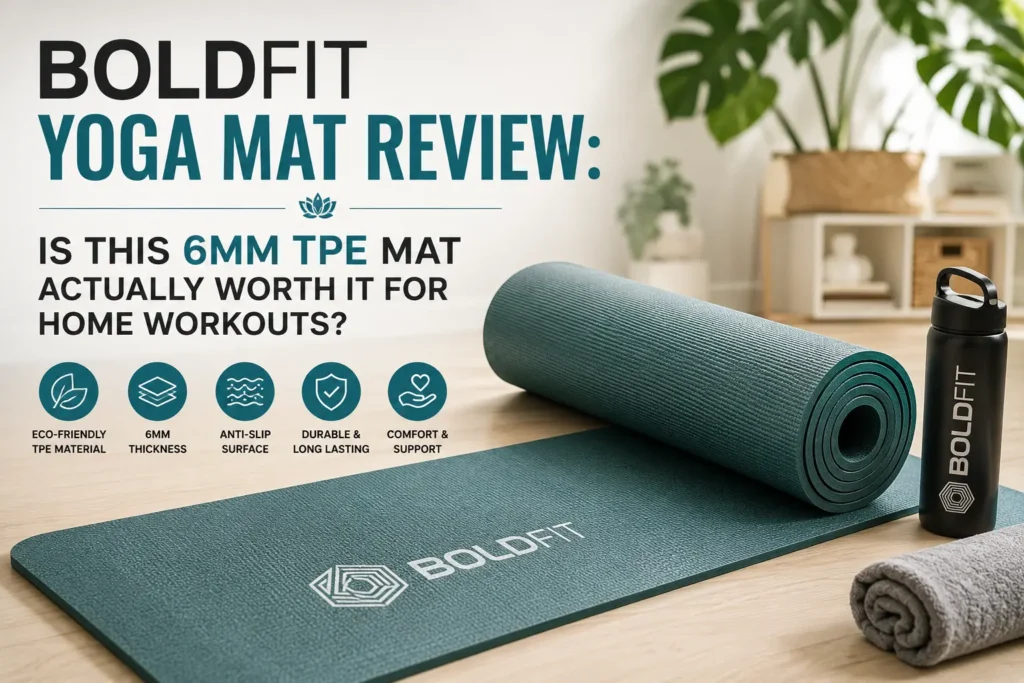
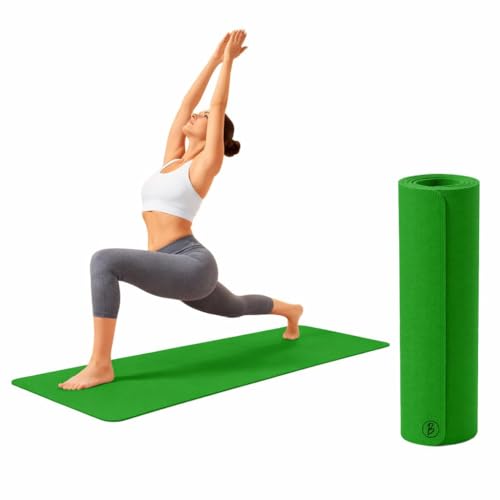
Boldfit Classic Pro Yoga Mat
6mm TPE, alignment lines, and a wavy grip base — here’s what actually stands out once it’s unrolled on your living room floor.
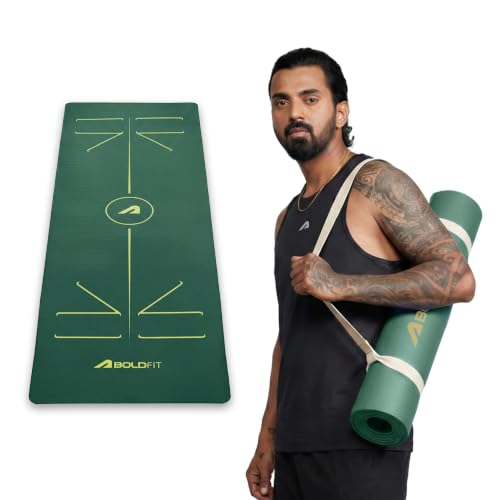
- GUIDED ALIGNMENT LINES: Improve Posture and Precision – The alignment markers help you place hands and feet consistently…
- 6MM OPTIMUM CUSHIONING: Designed with 6mm thickness to provide comfortable support for knees, elbows, and hips without c…
- FLEX GRIP TOP SURFACE: The top surface is engineered for reliable grip, helping reduce hand and foot movement during hol…
Once you pass 30, the floor stops feeling like a neutral surface — hard tile under your knees during a cat-cow stretch suddenly matters a lot more than it used to. That’s really what sent me hunting for a proper mat instead of continuing to make do with a thin travel one that slid around on the hallway floor.
The Boldfit Classic Pro caught my attention for a simple reason: it’s one of the few mats in its price range that actually prints alignment lines onto the surface, which sounded gimmicky until I tried it and realized how often I’d been drifting out of position without noticing.
Here’s a full, honest breakdown of what this mat gets right, where it has limits, and who it’s actually a smart buy for.
| Key Takeaways 1. The 6mm thickness strikes a solid balance — cushioned enough for knees and elbows, without feeling unstable during standing poses. 2. Printed alignment lines are a genuinely useful feature for beginners working on posture and consistency. 3. The wavy textured base noticeably reduces sliding on tile, wood, and marble floors. 4. TPE construction keeps it lightweight and low-odor compared to rubber mats, though it won’t outlast premium rubber long-term. 5. It’s best suited for home yoga, Pilates, stretching, and light floor workouts — not heavy-duty daily gym use. |
Table of Contents
1. What’s in the Box
The mat rolls out to a standard full-body length, comes with a basic carry strap for storage and transport, and is ready to use straight out of the packaging — no lingering rubber smell to air out first, which is a common complaint with cheaper mats.
2. Full Spec Breakdown
| Feature | Details |
| Material | TPE (Thermoplastic Elastomer) — eco-conscious, lightweight, and low-odor |
| Thickness | 6mm — balanced cushioning for joints without sacrificing stability |
| Top Surface | Flex Grip texture designed to reduce hand and foot slippage during holds |
| Base | Anti-slip wavy texture for better contact with tile, wood, and marble floors |
| Special Feature | Printed guided alignment lines for posture and positioning consistency |
| Best For | Yoga, Pilates, stretching, mobility work, light floor and bodyweight exercises |
| Included | Yoga mat + carry strap |
3. Alignment Lines: Actually Useful, or Just Marketing?
This is the feature that actually earns its spot on the spec sheet. If you’ve ever caught yourself glancing down mid-flow, unsure whether your feet are hip-width apart or your hands are properly under your shoulders, the printed guides solve that quietly and automatically.
It’s most valuable for beginners and anyone practicing without a trainer in the room — the lines do a bit of the coaching work that you’d otherwise have to guess at or check in a mirror.
Boldfit Classic Pro Yoga Mat — View on Amazon
4. Cushioning and Grip in Real Use
At 6mm, the mat sits in the sweet spot between the paper-thin travel mats that leave your knees aching and the overly plush mats that make balance poses feel unstable. Kneeling poses and floor stretches feel noticeably more comfortable than on a bare tile or a thinner mat.
The wavy base is the quieter hero here — on smooth flooring like tile or engineered wood, a lot of budget mats creep during transitions. This one stays put, which means less time readjusting and more time actually holding the pose.
The top surface holds grip well even as hands and feet get slightly sweaty partway through a session, which matters more than people expect once you’re 20 minutes into a flow.
5. Pros and Cons
| What I Liked | Worth Knowing |
| ✓ 6mm cushioning genuinely softens knee and elbow pressure during floor work | • 6mm thickness means slightly less stability for single-leg balance poses compared to a thinner mat |
| ✓ Alignment lines make a real difference for beginners who aren’t sure where their hands and feet should land | • TPE mats generally have a shorter lifespan than premium natural rubber under daily heavy use |
| ✓ Wavy textured base grips tile, wood, and marble floors well — minimal creeping during flows | • Alignment lines are a big help for beginners but may feel unnecessary for advanced practitioners |
| ✓ Top surface stays grippy even once palms and feet get sweaty mid-session | • Strap included is basic — fine for storage, not padded for long carries |
| ✓ TPE material is lighter than rubber mats and doesn’t carry that strong “new mat” smell | • Like most TPE mats, it should be wiped dry after sweaty sessions to prevent surface tackiness |
6. Who It’s Best For
- Beginners who want built-in posture guidance without needing a mirror or instructor
- Anyone doing yoga, Pilates, or stretching routines on hard home flooring like tile or wood
- People who’ve dealt with mats sliding around mid-session and want a genuinely grippy base
- Those who prefer a lighter, lower-odor mat over a heavier natural rubber option
- Not the ideal pick if you want a mat thick enough for high-impact floor work or heavy daily gym use over years
7. Common Mistakes People Make With Yoga Mats
- Skipping the initial wipe-down — a quick clean before first use removes manufacturing residue and improves grip.
- Storing it tightly rolled with the top surface facing out, which can cause it to curl at the edges over time.
- Using it directly on rough outdoor surfaces, which can wear down the textured base faster than intended.
- Not drying it fully after sweaty sessions, which can make the surface feel tacky over time.
- Assuming a thicker mat is always better — too much cushioning can actually hurt balance in standing poses.
8. Where to Get It
If you want to check current pricing, sizing, and availability, here’s the listing:

9. Frequently Asked Questions
Q: Is 6mm thick enough for a yoga mat?
A: Yes, for most home practice — yoga, Pilates, stretching, and light floor exercises — 6mm offers a solid balance of joint cushioning and pose stability. Very thick mats can actually make balance poses harder.
Q: Does the alignment line feature actually help?
A: It’s especially useful for beginners and anyone practicing without a trainer, since it gives a visual reference for hand and foot placement instead of relying on guesswork.
Q: Will it slip on tile or wood flooring?
A: The wavy textured base is specifically designed to grip smooth surfaces like tile, marble, and wood better than a flat-bottomed mat, and it holds up well in practice.
Q: Is TPE a good material compared to rubber?
A: TPE is lighter, generally lower odor, and more eco-conscious than PVC, though premium natural rubber mats tend to last longer under very heavy daily use. For regular home practice, TPE is a solid, practical choice.
Q: Is this mat suitable for beginners?
A: Yes — the cushioning, grip, and especially the alignment lines make it a particularly beginner-friendly option for building consistent form.
10. Final Verdict
The Boldfit Classic Pro earns its place as a genuinely practical home workout mat rather than a gimmick-heavy purchase. The alignment lines are the standout feature, the grip and cushioning hold up in daily use, and the price point makes it an easy addition to a home fitness setup.
It’s not going to outlast a premium studio-grade rubber mat over many years of heavy use, but for yoga, Pilates, and general floor work at home, it checks the boxes that actually matter.
Conclusion
A good mat is one of those small purchases that quietly changes how consistent you are with a home routine — less discomfort, less sliding around, more actual practice. If your current mat is thin, slippery, or just not cutting it anymore, this is a solid, well-thought-out upgrade worth considering.
| A Quick Note Individual comfort and durability can vary based on flooring type, workout intensity, and personal preference. As with any new fitness routine or equipment, ease into it and check in with a doctor first if you have existing joint or mobility concerns. |