

Walk into any supplement store or scroll through any wellness feed and you’ll find hundreds of products promising to reverse aging, ignite your metabolism, balance your hormones, and optimize your performance. The supplement industry is worth over $150 billion globally — and a significant portion of it is built on weak evidence, clever marketing, and the very real anxieties adults over 30 have about their health.
That doesn’t mean supplements are useless. Quite the opposite. There is a core group of evidence-based supplements that can genuinely and meaningfully support your health after 30 — filling nutritional gaps that are nearly impossible to close through diet alone, supporting the hormonal and physiological changes that occur in this decade, and addressing deficiencies that silently undermine energy, body composition, and long-term vitality.
This guide cuts through the marketing and ranks the 12 best supplements for adults over 30 based on the actual strength and consistency of the clinical evidence behind them. Each is evaluated on the quality of human trials, the magnitude of effect, and the relevance to the specific challenges adults face in this life stage. No hype. Just science.
| Key Takeaways |
| • Most supplements are poorly evidenced — a small number are exceptionally well-supported by clinical research. |
| • Adults over 30 have specific nutritional needs and deficiency patterns that make certain supplements genuinely high-value. |
| • Magnesium, Vitamin D3, and Omega-3s are the three most universally applicable supplements for this age group. |
| • Evidence tiers matter: a supplement backed by 50 RCTs is very different from one supported by 2 small studies. |
| • Supplements work best as part of a comprehensive approach — they enhance good foundations, they don’t replace them. |
| • Quality varies enormously by brand — third-party testing, bioavailable forms, and transparent labeling are non-negotiable. |
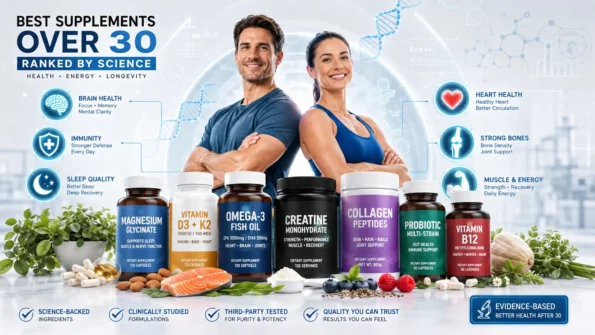
🔬 How We Ranked These Supplements
Each supplement was evaluated against four criteria weighted by scientific rigor:
- Volume and quality of human clinical trials — randomized controlled trials (RCTs) carry far more weight than observational studies or animal research
- Consistency of effect across independent research groups — results replicated across multiple trials and populations are far more reliable than single impressive studies
- Magnitude of clinically meaningful benefit — statistical significance that produces no real-world impact is ranked lower than a perceptible, meaningful change in health outcomes
- Specific relevance to adults over 30 — supplements addressing documented biological and nutritional shifts in this decade are prioritized
Evidence rating: 5 Stars = Exceptional (multiple large RCTs, consistent effects) | 4 Stars = Strong (several RCTs, generally consistent results) | 3 Stars = Moderate (some RCTs, promising but developing).
📊 Master Ranking Table — All 12 Supplements at a Glance
| Rank | Supplement | Evidence | Primary Benefits |
| #1 | Magnesium Glycinate | 5 Stars | Sleep, cortisol, muscle, energy |
| #2 | Vitamin D3 + K2 | 5 Stars | Immunity, hormones, bones, mood |
| #3 | Omega-3 Fish Oil (EPA/DHA) | 5 Stars | Heart, brain, inflammation, joints |
| #4 | Creatine Monohydrate | 5 Stars | Muscle, strength, brain, metabolism |
| #5 | Ashwagandha (KSM-66) | 4 Stars | Cortisol, testosterone, anxiety, sleep |
| #6 | Vitamin B12 (Methylcobalamin) | 4 Stars | Energy, nerves, brain, red blood cells |
| #7 | Collagen Peptides + Vitamin C | 4 Stars | Joints, skin, gut, connective tissue |
| #8 | Zinc + Copper | 4 Stars | Testosterone, immunity, thyroid, skin |
| #9 | Probiotic (Multi-Strain) | 4 Stars | Gut health, immunity, metabolism, mood |
| #10 | CoQ10 (Ubiquinol) | 3 Stars | Cellular energy, heart, anti-aging |
| #11 | Berberine | 4 Stars | Blood sugar, cholesterol, gut, weight |
| #12 | L-Theanine | 3 Stars | Focus, calm, sleep, stress relief |
| #1 MAGNESIUM GLYCINATE |
| Evidence Tier: 5 Stars — Exceptional: Multiple large RCTs, consistent across populations |
| The most universally relevant supplement for adults over 30 — and the most commonly deficient. |
Magnesium participates in over 300 enzymatic reactions — including every step of ATP production, DNA synthesis, muscle contraction and relaxation, blood sugar regulation, and neurotransmitter function. It is, without exaggeration, the mineral that keeps your cells running.
And most adults aren’t getting enough of it. Surveys consistently show that 48-68% of US adults consume less magnesium than recommended — a pattern worsened by modern processed diets. The consequences directly match the most common complaints in adults over 30: poor sleep, anxiety, muscle cramps, fatigue, elevated blood pressure, and insulin resistance.
What the Research Shows
- Sleep: RCTs consistently show improved sleep quality, reduced onset latency, and longer sleep duration in magnesium-insufficient adults
- Anxiety: meaningful reductions in GAD-7 anxiety scores in double-blind trials
- Blood pressure: significant reductions in hypertensive adults in multiple meta-analyses
- Insulin sensitivity: improved fasting glucose and insulin markers in pre-diabetic populations
- Muscle function: reduced cramp frequency and improved recovery in active adults
Why Glycinate Specifically
Magnesium oxide — found in most cheap supplements — has approximately 4% absorption and frequently causes digestive distress. Magnesium glycinate binds magnesium to the amino acid glycine, producing dramatically superior absorption and tolerability. Glycine itself also has calming properties, making evening supplementation ideal for sleep support.
| Key Benefit | Best For | Typical Dose | Best Form |
| Sleep, calm, muscle, energy, blood sugar | Almost all adults 30+ (deficiency is near-universal) | 300-400mg elemental magnesium at night | Glycinate or malate — avoid oxide |
| #2 VITAMIN D3 + K2 |
| Evidence Tier: 5 Stars — Exceptional: Extensive RCT data across multiple health outcomes |
| Functions more like a hormone than a vitamin — and most adults over 30 are running deficient. |
Vitamin D activates receptors in virtually every tissue type in the body and regulates over 1,000 genes. Its influence spans immune function, bone density, muscle function, testosterone production, insulin sensitivity, mood regulation, and cardiovascular health.
Despite its importance, an estimated 41-50% of American adults are deficient — and a much higher proportion of indoor-dwelling adults over 30 fall below optimal levels. Standard labs consider anything above 20 ng/mL as ‘sufficient’; functional research identifies 50-80 ng/mL as the optimal range for health outcomes.
The D3 + K2 Combination
Vitamin D3 is the biologically active, superior-absorbing form over D2. Vitamin K2 (as MK-7) is a critical partner: D3 significantly increases calcium absorption, but without K2, that calcium can deposit in arteries rather than bones. D3 and K2 should always be taken together.
Key Research Findings
- 11,000-participant meta-analysis: D supplementation significantly reduces respiratory infection risk
- Associated with reduced all-cause mortality in multiple large prospective studies
- Improved muscle strength, reduced fall risk, and better recovery in deficient adults
- Low vitamin D consistently associated with higher rates of depression and anxiety
- Deficient men show lower testosterone; supplementation studies show modest improvements in T levels
| Key Benefit | Best For | Typical Dose | Best Form |
| Immunity, bones, mood, hormones, metabolism | Virtually all indoor-dwelling adults 30+ | 2,000-5,000 IU D3 + 90-200 mcg K2 (MK-7) daily | D3 (cholecalciferol) + K2 as MK-7 |
| #3 OMEGA-3 FATTY ACIDS (EPA/DHA) |
| Evidence Tier: 5 Stars — Exceptional: Thousands of studies; among the most researched nutrients in existence |
| Anti-inflammatory, cardioprotective, brain-supportive — and most adults are chronically deficient. |
EPA and DHA are essential fats — your body cannot synthesize them — that form the structural building blocks of cell membranes throughout the body, with particularly high concentrations in the brain, eyes, and heart. They are also the precursors to anti-inflammatory signaling molecules that counteract the chronic inflammation increasingly recognized as a root driver of virtually every major chronic disease.
The modern Western diet has a dramatically skewed omega-6 to omega-3 ratio — estimated at 15:1 to 20:1, versus the roughly 4:1 ratio our biology is optimized for. This imbalance directly promotes systemic inflammation and is one of the most modifiable dietary risk factors for cardiovascular disease, metabolic syndrome, and neurological decline.
Documented Benefits
- Cardiovascular: reduces triglycerides 15-30% at therapeutic doses; REDUCE-IT trial showed reduced cardiovascular events with 4g EPA
- Brain health: DHA is the primary structural fat in the brain; higher omega-3 index associated with larger brain volume and better cognitive function
- Inflammation: measurably reduces CRP, IL-6, and TNF-alpha — key inflammatory markers elevated in metabolic and autoimmune conditions
- Muscle: omega-3s enhance the muscle protein synthesis response to protein intake — directly relevant to muscle preservation after 30
- Mood: EPA specifically has strong evidence for depressive symptoms, comparable to some antidepressants in mild-to-moderate presentations
| Key Benefit | Best For | Typical Dose | Best Form |
| Inflammation, heart, brain, mood, joints | All adults 30+ not eating fatty fish 3x/week | 2-3g combined EPA+DHA daily | Triglyceride-form fish oil or algae oil (vegan) |
| #4 CREATINE MONOHYDRATE |
| Evidence Tier: 5 Stars — Exceptional: Most researched performance supplement in existence (500+ studies) |
| Not just for athletes — creatine is a longevity and metabolism supplement hiding in plain sight. |
Creatine is one of the most extensively studied nutritional supplements in existence. Most adults over 30 associate it with bodybuilders — a significant mischaracterization. Its benefits extend far beyond gym performance.
Creatine is stored predominantly in muscle tissue, where it serves as a rapid energy buffer — regenerating ATP during high-intensity effort. Supplementation increases muscle creatine stores by 20-40%, improving performance, recovery, and signaling greater muscle protein synthesis even at rest.
Why Adults Over 30 Specifically Benefit
As muscle mass declines with age, creatine provides a direct countermeasure: it increases strength and power output (enabling more productive resistance training), reduces muscle damage, speeds recovery, and independently increases lean muscle mass through non-training mechanisms. Adults eating large amounts of red meat already have higher dietary creatine; vegetarians and vegans — with very low dietary creatine intake — see the most dramatic benefit.
The Underreported Brain Benefits
The brain is a high-energy organ heavily reliant on the ATP-PCr system that creatine supports. A 2023 meta-analysis confirmed significant improvements in working memory and cognitive performance from creatine supplementation across multiple trials. Its potential neuroprotective effects for age-related cognitive decline are an active area of research.
| Key Benefit | Best For | Typical Dose | Best Form |
| Muscle, strength, metabolism, brain, recovery | All adults 30+ doing any resistance training | 3-5g daily (no loading phase needed) | Creatine monohydrate only — not ethyl ester or HCl |
| #5 ASHWAGANDHA (KSM-66 OR SENSORIL) |
| Evidence Tier: 4 Stars — Strong: Multiple high-quality RCTs; growing evidence base |
| The most clinically validated adaptogen — with documented effects on cortisol, testosterone, and anxiety. |
Ashwagandha has been used for over 3,000 years in Ayurvedic medicine — but the past decade has produced a rigorous body of RCT-level evidence validating several of its most important effects. The mechanism centers on the HPA axis — the system governing cortisol production. Ashwagandha’s active withanolides modulate HPA axis reactivity, reducing both baseline cortisol and the stress-triggered cortisol surge.
What Clinical Trials Show
- Cortisol: multiple RCTs show 14-27% reductions in serum cortisol in chronically stressed adults over 8-12 weeks
- Anxiety: significant reductions in validated anxiety scores in several double-blind, placebo-controlled trials
- Testosterone: 2 RCTs in men with low testosterone show meaningful 15-17% increases in free and total testosterone
- Sleep: improves sleep quality, reduces onset latency, and increases sleep duration in studies using validated sleep tools
- Physical performance: improves VO2 max, muscle strength, and recovery in active adults
KSM-66 and Sensoril are proprietary standardized extracts with the largest clinical evidence bases — strongly preferred over generic ashwagandha root powder.
| Key Benefit | Best For | Typical Dose | Best Form |
| Cortisol, stress, testosterone, anxiety, sleep | Adults 30+ with high stress, low T, or anxiety | 300-600mg KSM-66 (or 125-250mg Sensoril) daily | KSM-66 or Sensoril standardized extract only |
| #6 VITAMIN B12 (METHYLCOBALAMIN) |
| Evidence Tier: 4 Stars — Strong: Well-established; critical for deficiency-prone populations |
| Essential for energy, nerve health, and brain function — and absorption declines meaningfully with age. |
Vitamin B12 is essential for red blood cell formation, DNA synthesis, myelin sheath maintenance, and neurotransmitter production. Deficiency is one of the most common causes of neurological deterioration and profound fatigue — and its prevalence increases significantly after 30.
Absorption requires intrinsic factor, a gastric protein whose production declines with age, certain medications (metformin, proton pump inhibitors), and gastrointestinal conditions. Plant-based eaters are at very high risk as B12 is found almost exclusively in animal products.
Methylcobalamin vs. Cyanocobalamin
Most cheap B12 supplements use cyanocobalamin — a synthetic form requiring conversion in the body before becoming biologically active. Methylcobalamin is the directly bioactive, neurologically relevant form. For neurological protection and cognitive support, methylcobalamin is the superior choice — particularly for those with the MTHFR gene variant, which impairs this conversion.
- Optimal serum B12: above 500 pg/mL — many ‘normal’ levels at 200-300 pg/mL are associated with neurological symptoms
- Sublingual methylcobalamin bypasses gastric absorption entirely — ideal for those with absorption issues
| Key Benefit | Best For | Typical Dose | Best Form |
| Energy, nerves, brain, mood, red blood cells | Vegans, metformin/PPI users, adults 40+, fatigue sufferers | 1,000-2,000 mcg daily; sublingual for best absorption | Methylcobalamin (not cyanocobalamin) |
| #7 COLLAGEN PEPTIDES + VITAMIN C |
| Evidence Tier: 4 Stars — Strong: Growing RCT evidence for joint, skin, and connective tissue outcomes |
| The structural protein of your joints, skin, and gut — production declines measurably after 30. |
Collagen is the most abundant protein in the human body, forming the structural scaffold of skin, joints, tendons, ligaments, bones, and the gut lining. After 30, natural collagen production declines approximately 1-1.5% per year, accelerated by sun exposure, poor sleep, and high sugar intake.
Hydrolyzed collagen peptides are efficiently absorbed and have been shown in multiple RCTs to stimulate fibroblasts (the cells producing collagen in connective tissues) to increase their own collagen synthesis — meaning supplemental collagen actively signals the body to produce more of its own.
Joint Health Evidence
A 24-week RCT in athletes showed collagen supplementation significantly reduced joint pain during activity. A separate study in knee osteoarthritis found meaningful improvements in pain and function scores. The amino acid profile of collagen — rich in glycine, proline, and hydroxyproline — uniquely supports cartilage and tendon matrix regeneration that standard protein supplements cannot replicate.
The Vitamin C Connection
Vitamin C is an essential cofactor in collagen synthesis. Without it, the amino acids cannot be properly incorporated into stable collagen structure. Take 10-15g of collagen peptides alongside 200-500mg of vitamin C — ideally 30-60 minutes before exercise or first thing in the morning.
| Key Benefit | Best For | Typical Dose | Best Form |
| Joints, skin, gut lining, hair, nails, tendons | Adults 30+ with joint issues, active individuals, skin focus | 10-15g collagen + 200-500mg Vitamin C daily | Hydrolyzed bovine or marine collagen peptides |
| #8 ZINC + COPPER |
| Evidence Tier: 4 Stars — Strong: Well-established roles; important for those with dietary gaps |
| Critical for testosterone, immunity, thyroid, and skin — often quietly low in adults over 30. |
Zinc is an essential trace mineral involved in over 300 enzymatic processes including testosterone synthesis, immune cell production, thyroid hormone conversion, wound healing, and DNA repair. Deficiency is more common than most realize — estimated to affect up to 12% of the US population, with significantly higher rates among plant-heavy eaters (plant zinc is less bioavailable due to phytates).
Zinc is also directly involved in inhibiting aromatase — the enzyme converting testosterone into estrogen. Adequate zinc helps maintain a favorable testosterone-to-estrogen ratio, making it one of the most relevant minerals for hormonal health after 30.
The Critical Zinc-Copper Balance
High-dose zinc supplementation depletes copper over time — competing for absorption. Copper deficiency causes anemia, neurological symptoms, and immune dysfunction. Any zinc supplement taken long-term should include copper at approximately a 15:1 ratio (15mg zinc + 1mg copper).
| Key Benefit | Best For | Typical Dose | Best Form |
| Testosterone, immunity, thyroid, skin, aromatase inhibition | Adults 30+ with plant-heavy diets, hormonal issues, immune concerns | 15-25mg zinc + 1-2mg copper daily | Zinc bisglycinate or picolinate + copper gluconate |
| #9 PROBIOTIC (MULTI-STRAIN) |
| Evidence Tier: 4 Stars — Strong: Rapidly expanding high-quality evidence across multiple health domains |
| Your gut microbiome influences metabolism, immunity, mood, and hormones — and needs regular support. |
The gut microbiome — trillions of bacteria and microorganisms inhabiting your digestive system — has emerged as one of the most consequential systems in human health. Gut bacteria regulate immune function, produce approximately 90% of serotonin, metabolize estrogen, influence insulin sensitivity and metabolic rate, and communicate with the brain via the gut-brain axis.
After 30, microbiome diversity tends to decline — particularly with high stress, antibiotic exposure, reduced dietary fiber, and alcohol consumption. Less diverse microbiomes are associated with higher inflammation, impaired immune function, and metabolic dysfunction.
What to Look For
- Minimum 10-50 billion CFU for meaningful colonization
- Multiple strains: Lactobacillus acidophilus, L. rhamnosus, L. plantarum; Bifidobacterium longum, B. lactis
- Third-party tested for CFU count at end of shelf life — not just at manufacture
- Pair with prebiotic fiber (inulin, chicory root) to support colonization
- Saccharomyces boulardii is particularly well-evidenced for post-antibiotic microbiome restoration
| Key Benefit | Best For | Typical Dose | Best Form |
| Gut health, immunity, metabolism, mood, hormone clearance | All adults 30+; especially post-antibiotic or high-stress | 10-50 billion CFU, multi-strain, daily | Multi-strain capsule; refrigerated preferred |
| #10 COQ10 (UBIQUINOL) |
| Evidence Tier: 3 Stars — Moderate-Strong: Consistent RCTs for specific populations; strong mechanistic basis |
| The mitochondrial energy co-factor that declines with age — and is depleted by common medications. |
CoQ10 is a fat-soluble antioxidant and essential component of the mitochondrial electron transport chain — the cellular machinery producing ATP. The body produces CoQ10 endogenously, but production declines measurably after 30 and is significantly depleted by statin medications (among the most commonly prescribed drugs in adults over 35-40).
Form matters critically: Ubiquinone (found in most cheap supplements) requires conversion before use. Ubiquinol is the reduced, already-active form demonstrating 3-8x higher plasma levels per dose in clinical studies. Adults over 40 convert ubiquinone less efficiently — ubiquinol is strongly preferred.
Priority Populations
- Anyone taking statin medications — statins deplete CoQ10 by inhibiting the same pathway producing both cholesterol and CoQ10
- Adults with cardiovascular concerns — strong evidence for cardiac function improvement in heart failure
- Migraine sufferers — multiple RCTs show meaningful reduction in migraine frequency
- Adults over 40 with unexplained fatigue or poor recovery
| Key Benefit | Best For | Typical Dose | Best Form |
| Cellular energy, heart health, anti-aging, migraine prevention | Statin users, adults 40+, cardiovascular concerns, chronic fatigue | 100-300mg daily with a fat-containing meal | Ubiquinol (not ubiquinone) for adults 40+ |
| #11 BERBERINE |
| Evidence Tier: 4 Stars — Strong: Extensive RCT data for metabolic outcomes; often compared to metformin |
| A plant compound with remarkable metabolic effects — particularly relevant for blood sugar and cholesterol. |
Berberine is a plant alkaloid with centuries of traditional medicinal use — and a rapidly growing body of RCT-level evidence validating its metabolic effects. Its primary mechanism is activation of AMPK, the body’s ‘metabolic master switch,’ which improves insulin sensitivity, reduces hepatic glucose production, and promotes fat oxidation. This is also the primary mechanism of metformin — leading to direct clinical comparisons where berberine has shown comparable results.
Clinical Evidence Highlights
- HbA1c: multiple RCTs show reductions of 0.5-1.5% in adults with type 2 diabetes — comparable to metformin in several studies
- Fasting glucose: consistent reductions of 15-25% in impaired fasting glucose populations
- Lipid panel: reduces total cholesterol, LDL, and triglycerides while increasing HDL in multiple trials
- Body weight: modest but consistent reductions (2-3kg over 12 weeks) in overweight adults
- Gut microbiome: prebiotic-like effects on gut bacteria, reducing pathogenic species
Important: Berberine has significant drug interactions — particularly with blood sugar medications and some antibiotics. Always consult your healthcare provider if you are on any medications.
| Key Benefit | Best For | Typical Dose | Best Form |
| Blood sugar, insulin sensitivity, cholesterol, weight | Adults 30+ with pre-diabetes, high cholesterol, metabolic concerns | 500mg, 2-3x daily with meals | Berberine HCl; cycle 8 weeks on, 2 weeks off |
| #12 L-THEANINE |
| Evidence Tier: 3 Stars — Moderate: Consistent effects in well-designed trials; particularly strong with caffeine |
| The calm-without-drowsy amino acid — ideal for high-performing adults managing stress and focus demands. |
L-theanine is an amino acid found almost exclusively in tea leaves. It promotes alpha brain wave activity — the calm, focused, alert mental state associated with meditation and experienced flow states. Unlike anxiolytics, L-theanine produces relaxation without drowsiness, making it uniquely useful for adults who need to manage anxiety while remaining productive.
L-theanine works by increasing GABA, serotonin, and dopamine while reducing excitatory glutamate activity. The result is measurably calmer, more focused mental performance with reduced physiological anxiety responses.
The L-Theanine + Caffeine Stack
The most evidence-supported application is combining L-theanine with caffeine at a 2:1 ratio (200mg L-theanine + 100mg caffeine). Multiple RCTs show this combination produces greater improvements in sustained attention, accuracy, and cognitive performance than either alone — while significantly reducing caffeine’s jitteriness and crash. For the millions of adults relying on coffee for productivity, adding L-theanine is one of the simplest evidence-based cognitive upgrades available.
| Key Benefit | Best For | Typical Dose | Best Form |
| Calm focus, anxiety reduction, sleep, cognitive performance | Adults 30+ with stress, anxiety, or focus challenges; coffee drinkers | 100-200mg; 200mg before sleep for sleep support | Pure L-theanine (Suntheanine is the most studied form) |
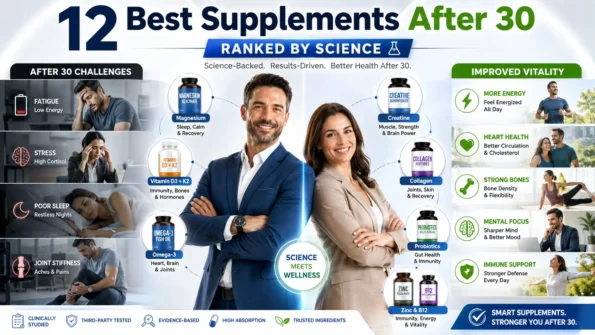
🧩 How to Build Your Supplement Stack After 30
Rather than taking every supplement on this list, build a stack strategically based on your goals and identified gaps. Here are three evidence-based starter stacks:
The Universal Foundation Stack (Everyone Over 30)
| Supplement | When to Take | With Food? | Key Note |
| Magnesium Glycinate 300-400mg | Evening / before bed | Optional | Safe with almost all supplements |
| Vitamin D3 2,000-4,000 IU + K2 100mcg | Morning with breakfast | Yes (fat-soluble) | Space apart from magnesium |
| Omega-3 EPA/DHA 2g | With largest meal | Yes (reduces reflux) | Space 2+ hours from blood thinners |
| Vitamin B12 1,000mcg sublingual | Morning, under tongue | No | Take in AM — supports energy |
The Performance + Body Composition Stack
| Supplement | When to Take | With Food? | Key Note |
| Creatine Monohydrate 3-5g | Any time daily | Not required | Consistency matters more than timing |
| Collagen Peptides 10-15g + Vit C | Morning or pre-workout | Optional | Take with 200-500mg Vitamin C |
| Zinc 15-20mg + Copper 1-2mg | Evening with food | Yes (reduces nausea) | Avoid with calcium supplements |
| Protein Powder 25-40g (as needed) | Post-workout or as meal supplement | n/a | Prioritize total daily protein target |
The Stress, Sleep & Hormonal Balance Stack
| Supplement | When to Take | With Food? | Key Note |
| Ashwagandha KSM-66 300-600mg | Evening (or split AM/PM) | Yes (improves absorption) | Avoid if hyperthyroid; consult MD if on thyroid meds |
| Magnesium Glycinate 400mg | 30-60 min before bed | Not required | Synergistic with ashwagandha for sleep |
| L-Theanine 200mg | Before bed or with morning coffee | Not required | 200mg + caffeine for daytime focus |
| Omega-3 EPA/DHA 2g | With dinner | Yes | EPA particularly relevant for mood support |
⚠️ Common Supplement Mistakes Adults Over 30 Make
| Avoid These Costly and Counterproductive Errors |
| • Choosing the cheapest form — bioavailability varies enormously. Magnesium oxide, cyanocobalamin, and ubiquinone are significantly inferior to their better-absorbed counterparts. Pay for quality forms. |
| • Taking everything at once — zinc and calcium compete for absorption; iron and calcium interfere with each other. Spacing and pairing matter significantly for efficacy. |
| • Expecting immediate results — most supplements require 4-12 weeks of consistent use to produce measurable changes. Short trials lead to premature abandonment of genuinely effective supplements. |
| • Not testing first — supplementing without knowing your baseline (vitamin D, B12, ferritin, hormones) means you may be addressing the wrong gaps entirely. Test, don’t guess. |
| • Ignoring drug interactions — berberine, omega-3s, magnesium, and others have meaningful interactions with common medications. Always inform your prescribing doctor. |
| • Buying from untested brands — the supplement industry is poorly regulated. Always choose brands with NSF, USP, Informed Sport, or BSCG third-party certification. |
❓ Frequently Asked Questions
| Q: What are the most important supplements for adults over 30? |
| The three most universally applicable are magnesium glycinate (deficiency is near-universal; impacts sleep, stress, energy, and metabolism), vitamin D3 + K2 (over 40% of adults are deficient; impacts immunity, hormones, and mood), and omega-3 fish oil (reduces inflammation; supports brain, heart, and body composition). These three alone address the most common nutritional gaps in this age group with the strongest evidence bases. |
| Q: Do I need supplements if I eat a healthy diet? |
| A whole-food diet significantly reduces your supplementation needs — but several nutrients remain genuinely difficult to obtain in optimal amounts through food alone. Vitamin D (nearly impossible without significant sun exposure), omega-3s (requires eating fatty fish 3+ times per week), and magnesium (depleted from modern soils) are the most common examples. Testing your levels is the most objective way to determine where you genuinely need supplementation. |
| Q: Are these supplements safe for long-term use? |
| The supplements on this list are generally well-established as safe at recommended doses, with nuances: zinc should always be paired with copper for long-term use; fat-soluble vitamins (D, K) can accumulate — don’t significantly exceed doses without testing; berberine is best cycled (8 weeks on, 2 weeks off). Any supplement taken alongside medications warrants a conversation with your healthcare provider. |
| Q: How do I know which supplements I actually need? |
| Testing is the most reliable answer. Request vitamin D (25-OH), B12, ferritin, RBC magnesium, a full hormonal panel, and fasting insulin. Without testing, the universal foundation stack (magnesium, D3+K2, omega-3s, B12) addresses the most statistically common deficiencies in adults over 30 with minimal risk of over-supplementation. |
| Q: When is the best time to take these supplements? |
| Key timing principles: fat-soluble supplements (D3+K2, omega-3s, CoQ10) require fat-containing meals for absorption. Magnesium glycinate is most beneficial in the evening for sleep. Creatine can be taken any time — consistency matters more than timing. Ashwagandha can be split morning/evening. B12 is best taken in the morning as it supports energy metabolism. |
Your Action Plan — Start Here
| Build Your Stack Intelligently |
| 1. Test your baselines first — request vitamin D (25-OH), B12, ferritin, RBC magnesium, and a full hormonal panel. This tells you exactly which gaps are real and prevents expensive guesswork. |
| 2. Start with the universal foundation — magnesium glycinate at night, vitamin D3+K2 with breakfast, and omega-3s with dinner. These three address the most common deficiencies with the strongest evidence. |
| 3. Choose quality forms — look for NSF, USP, or Informed Sport certified brands. Glycinate (not oxide), D3 (not D2), methylcobalamin (not cyanocobalamin), ubiquinol (not ubiquinone). |
| 4. Add goal-specific supplements — if active, add creatine and collagen. If stressed, add ashwagandha and L-theanine. If metabolic health is a concern, consider berberine under medical guidance. |
| 5. Reassess at 12 weeks — re-test vitamin D and any markers that were low at baseline. Most supplements require 8-12 weeks for measurable effect. Adjust based on results. |
Conclusion: Supplement Smarter, Not More
The supplement landscape is full of expensive products built on weak evidence. But within it, a core group of evidence-based supplements genuinely delivers — addressing the nutritional gaps, hormonal shifts, and physiological changes that occur after 30 in ways that are measurable, meaningful, and increasingly well-documented in the clinical literature.
The 12 supplements in this guide aren’t magic pills. They are tools — tools that work best when built on a foundation of quality nutrition, consistent sleep, regular movement, and managed stress. Used intelligently, they fill the gaps your diet can’t close and provide a meaningful advantage in your long-term health trajectory.
Start with the foundation. Test your baselines. Choose quality forms. Give it time. That’s the evidence-based approach — and it’s the one that actually produces results you can feel.
Medical Disclaimer: This article is for informational and educational purposes only. It does not constitute medical advice, diagnosis, or treatment. Supplement needs vary by individual health status, medications, and existing conditions. Always consult a qualified healthcare provider before starting any new supplement regimen, especially if you are pregnant, nursing, managing a chronic condition, or taking prescription medications.

[…] mcg is a high therapeutic dose, not a low-dose maintenance formula — not ideal if you just want a gentle daily […]