The Complete Dumbbell Guide for Adults 30+: Build Strength, Burn Fat & Train Anywhere
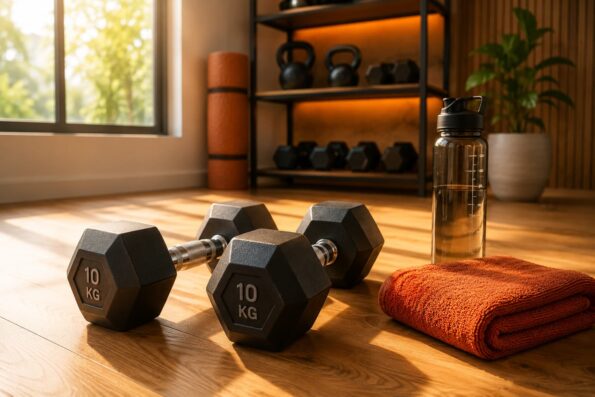
You joined a gym six months ago. The treadmill feels like torture, the machines are always taken, and half the equipment looks like it requires an engineering degree. Meanwhile, a single pair of dumbbells sits in the corner — simple, unassuming, and criminally underrated. Here’s the thing: dumbbells are arguably the most versatile piece of fitness equipment ever invented. They’re affordable, compact, and capable of delivering a full-body workout that rivals anything a fully equipped gym can offer. For adults over 30 — a group that deals with slowing metabolism, joint sensitivity, and packed schedules — dumbbells aren’t just convenient. They might be your best possible fitness tool. In this guide, you’ll learn everything: which dumbbells to buy, how to use them safely, the best exercises for fat loss and muscle gain after 30, and how to build a sustainable program you’ll actually stick to. KEY TAKEAWAYS Dumbbells activate stabilizer muscles that machines miss, making every rep more effective for functional strength. For adults over 30, resistance training with dumbbells helps counteract the natural 3–8% per decade muscle loss (sarcopenia). Adjustable dumbbells offer the best value for home gyms — one set replaces a full rack. A 3-day-per-week full-body dumbbell routine is enough to build muscle, burn fat, and improve metabolic health. Progressive overload (gradually adding weight or reps) is the single most important principle for continued results. Protein intake (0.7–1g per pound of bodyweight) combined with dumbbell training accelerates fat loss after 30. 1. Why Dumbbells Are the Perfect Tool for Adults Over 30 After 30, your body starts to change in ways that make smart training more important than ever. Muscle mass begins its slow decline. Metabolism softens. Recovery takes longer. Hormones shift. These changes don’t mean you can’t get into incredible shape — but they do mean that the type of training you choose matters more. Dumbbells address nearly every challenge that adults over 30 face when it comes to fitness. They Build Functional Strength Unlike fixed machines, dumbbells require you to stabilize the weight independently. This recruits smaller stabilizer muscles that machines skip entirely, building the kind of real-world strength that makes carrying groceries, playing with your kids, or avoiding injury in daily life much easier. They Protect Aging Joints Barbells lock your wrists and elbows into a fixed path. Dumbbells allow each arm to move naturally, reducing joint stress significantly — a major benefit for anyone with shoulder, elbow, or wrist sensitivity. They Fight Sarcopenia Sarcopenia — age-related muscle loss — begins in your 30s and accelerates if you don’t train. Research published in the Journal of Strength and Conditioning Research shows that resistance training is the most effective intervention to preserve and rebuild muscle tissue at any age. Dumbbells deliver that stimulus efficiently. They’re Supremely Versatile Upper body, lower body, core, cardio, mobility — dumbbells handle all of it. You can do a pressing movement, a hinge, a squat, a carry, and a rotation all with the same tool. That’s hard to match. 2. Types of Dumbbells: Which One Should You Buy? Walk into any sporting goods store and you’ll find a confusing array of options. Here’s a clear breakdown of the four main types, so you can choose the right one for your goals and budget. #1 Fixed Rubber-Coated Dumbbells • 5–100+ lbs Best for: Commercial gyms, anyone who wants durability The gold standard for gym floors. Rubber coating protects both the weight and your floors. Hex-shaped rubber dumbbells don’t roll, are easy to grip, and last decades. Downside: they’re expensive when bought as a full set. #2 Adjustable Dumbbells (Dial or Pin) • 5–90 lbs (single pair) Best for: Home gym owners, small spaces One set replaces an entire rack. Brands like Bowflex SelectTech and PowerBlock allow you to change weight with a dial or pin in seconds. Slightly bulkier, but the best value-per-square-foot option for a home gym. #3 Cast Iron Dumbbells • 5–100+ lbs Best for: Budget-conscious buyers, classic lifters Affordable and durable. They’re not coated, so they can scratch floors and rust if left damp. Best used with rubber floor mats. A great starter option if you buy a few pairs incrementally. #4 Neoprene Dumbbells • 1–15 lbs Best for: Beginners, seniors, light toning workouts Colorful, soft-grip, and comfortable — but limited in weight range. Perfect for warm-up circuits, mobility work, or rehabilitation. Not suited for progressive strength training. 3. How to Choose the Right Weight One of the most common mistakes beginners make is starting too light or too heavy. Here’s a simple guide based on the movement type. RULE The right weight should make your last 2–3 reps of each set feel genuinely challenging — but never so heavy that your form breaks down. General Starting Weight Ranges for Adults 30+ These are starting points. As you progress, you’ll need heavier weights — which is why adjustable dumbbells or a small rack of multiple pairs is ideal for long-term training. The Progressive Overload Principle Progressive overload means gradually increasing the challenge — either by adding weight, doing more reps, or adding sets. Without this, your body adapts and results plateau. A simple rule: when you can complete all reps of a set with good form, increase the weight by 5 lbs at your next session. 4. The 8 Best Dumbbell Exercises for Adults 30+ These eight exercises were selected for their effectiveness, joint-friendliness, and suitability for a wide range of fitness levels. Together, they train every major muscle group. Dumbbell Goblet Squat 3–4 sets × 10–15 reps | Targets: Quads, glutes, core Pro Tip: Hold the dumbbell vertically at your chest with both hands. Keep your elbows in, chest up, and knees tracking over your toes. This front-loaded position naturally encourages an upright torso — perfect for adults with lower back sensitivity. Romanian Deadlift (RDL) 3 sets × 10–12 reps | Targets: Hamstrings, glutes, lower back Pro Tip: Hold dumbbells in front of your thighs, hinge at the hips, and lower weights along your legs until