
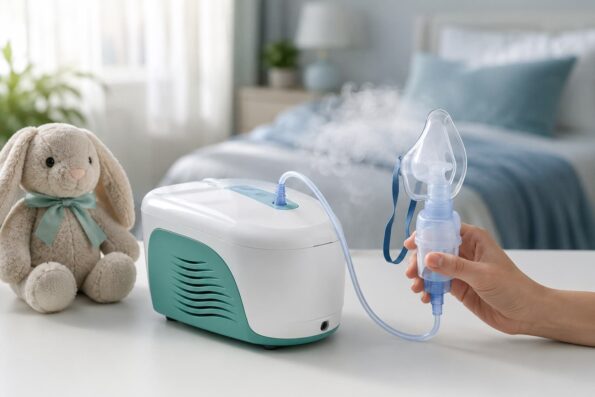
Low Noise Compressor Nebulizer for Child & Adult: Complete Guide (2026)
It is 2 a.m. Your child is wheezing. You reach for the nebulizer — and it roars to life like a small engine, startling them awake all over again. Sound familiar? For millions of families managing asthma, COPD, bronchitis, and allergic airway disease, this scenario plays out nightly. The equipment meant to provide relief is, ironically, adding stress. Enter the Low Noise Compressor Nebulizer — a category of medical-grade inhalation devices engineered specifically to deliver quiet, efficient, and effective aerosol therapy without the disruptive noise of older-generation compressors. Whether it is for a toddler with reactive airway disease or an adult managing chronic obstructive pulmonary disease, the quiet compressor nebulizer is fast becoming the preferred choice of pediatricians, pulmonologists, and home-care specialists alike. This guide covers everything: what a nebulizer actually is, how the low-noise compressor works, who it is designed for, what to look for when buying one, how to use it correctly, and what science says about compressor versus mesh nebulizers. By the end, you will know exactly how this device can fit into your family’s respiratory care routine. KEY TAKEAWAYS Compressor nebulizers convert liquid medication into breathable mist using compressed air — no heat, no ultrasound, preserving drug integrity. Low-noise models operate at 45–55 dB — quieter than a normal conversation — making them ideal for children and nighttime adult use. They are clinically effective for asthma, COPD, bronchitis, cystic fibrosis, and post-operative respiratory care. Proper mask fit, correct medication fill level (2–4 mL), and upright positioning are the three biggest factors in treatment efficacy. Universal compatibility: most compressor nebulizers work with all standard inhaled medications including salbutamol, ipratropium, and budesonide. Regular daily cleaning and weekly disinfection are non-negotiable for preventing medication contamination and respiratory infections. 1. What Is a Nebulizer — and Who Needs One? A nebulizer is a medical device that converts liquid medication into a fine aerosol mist fine enough to be inhaled deep into the lungs. Unlike metered-dose inhalers (MDIs), which require a coordinated breath-and-press technique, nebulizers deliver medication continuously through a mask or mouthpiece — making them especially suitable for young children, elderly patients, and anyone who finds inhaler coordination difficult during an acute episode. Conditions Commonly Treated With Nebulizers Nebulizers are also prescribed for patients who cannot use standard inhalers due to age, cognitive impairment, severe breathlessness, or physical disability. They are considered first-line devices for children under 5 years old in most clinical guidelines worldwide. 2. How a Low Noise Compressor Nebulizer Works Understanding the mechanism helps you use the device correctly and troubleshoot it effectively. The Compression Principle A compressor nebulizer contains an electric air pump — the compressor — that forces a high-velocity stream of compressed air through a narrow tube into the medication cup (also called the nebulizer chamber or drug reservoir). This jet of air hits the liquid medication and breaks it into microscopic droplets, creating an aerosol mist that the patient inhales through a connected mask or mouthpiece. The particle size produced is typically in the 1–5 micron range — small enough to bypass the upper airway and deposit directly in the bronchioles and alveoli where respiratory conditions originate. Why Low Noise? Conventional compressor nebulizers use large, single-piston air pumps that generate 60–70+ dB of operational noise — roughly equivalent to a loud conversation or a running vacuum cleaner. This level of noise is distressing for children and disruptive for nighttime treatments. Low-noise compressor nebulizers achieve their quieter operation through two engineering improvements: smaller, dual-piston or diaphragm pump systems that reduce mechanical vibration, and improved vibration-dampening housing materials that absorb rather than amplify pump noise. The result is operation in the 45–55 dB range — comparable to a quiet library or gentle background conversation. 🔊 NOISE FACT Standard compressor: 65–75 dB. Low-noise compressor nebulizer: 45–55 dB. That 20 dB difference is perceived by the human ear as roughly 4x quieter — a meaningful improvement for anxious children. 3. Key Features of the Low Noise Compressor Nebulizer (White) The white compressor nebulizer has become the dominant design choice in the home healthcare segment for practical reasons: it signals cleanliness and clinical trustworthiness, shows contamination easily (prompting cleaning), and maintains a neutral, non-intimidating aesthetic for child users. Here are the core features to understand. Ultra-Quiet Operation (45–55 dB) Engineered for use during sleep, in quiet households, and for noise-sensitive children. Many pediatricians now specifically recommend low-noise models for toddler asthma management to reduce treatment-associated anxiety. Universal Medication Compatibility Works with all standard aqueous nebulizer solutions including salbutamol (albuterol), ipratropium bromide, budesonide suspension, hypertonic saline, acetylcysteine, and amikacin. No proprietary cartridges or pods required. Dual Mask Set (Child + Adult) Includes two anatomically shaped masks — one pediatric (for ages 1–6) and one adult. Both are made from soft, medical-grade PVC for comfort during extended sessions of 10–15 minutes. Particle Size: 1–5 Microns (MMAD) Mass Median Aerodynamic Diameter in the therapeutic range ensures optimal deposition in the lower respiratory tract. This is the clinical standard for bronchodilator and corticosteroid delivery. Compact, Portable Design Typically weighs 600–900 grams. Fits easily on a bedside table, in a travel bag, or in a child’s backpack. AC-powered with a standard 2-pin plug; some models offer optional battery packs. Medication Cup Capacity: 6–10 mL Standard fill for nebulizer treatments is 2–4 mL. The larger cup reservoir allows for combination therapy (two medications mixed) and reduces the need for mid-treatment refills. Technical Specifications at a Glance Noise Level 45–55 dB Particle Size (MMAD) 1.0–5.0 microns Flow Rate 6–10 L/min Nebulization Rate 0.2–0.4 mL/min Medication Cup 6–10 mL capacity Treatment Time Approx. 8–15 minutes per session Power Supply AC 100–240V, 50/60 Hz Weight 600–900 grams Suitable Age Infants to elderly adults Warranty (typical) 1–2 years on compressor unit 4. Compressor vs. Mesh Nebulizer: Which Is Better? This is the most common question buyers face. Both types deliver aerosol medication — but they work differently and have different strengths. Here is an honest comparison. PROS CONS + Lower cost (typically $30–$80 vs. $100–$250) – Louder