
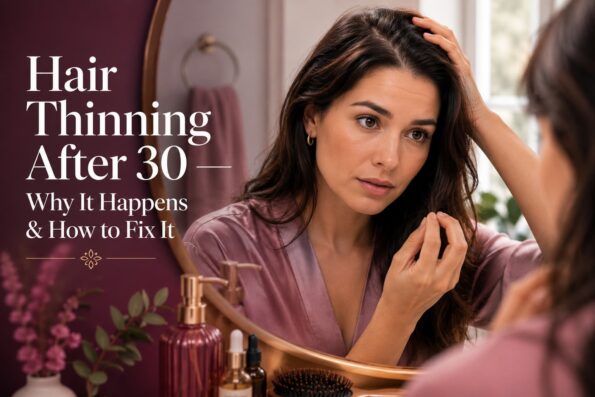
Why Is My Hair Thinning After 30? Causes, Treatments & What Actually Works

Why Is My Hair Thinning After 30? Causes, Treatments & What Actually Works

You notice it in the shower drain. On your hairbrush. In the bathroom mirror under harsh lighting that seems to have gotten crueler lately. Your hair — once thick and full — seems different now. Thinner. Less volume. A hairline that’s shifted, or a part that’s wider than it used to be. If you’re in your 30s and noticing more hair loss than you used to, you’re far from alone. Hair thinning after 30 affects roughly 40% of women and 50% of men by the time they reach their mid-30s to early 40s. But the reason it’s happening — and what you can do about it — is far more nuanced than most people realize. The good news: hair thinning is not always permanent. Many of the most common causes are treatable or reversible, especially when caught early. But first, you need to understand what’s actually driving the change — because the wrong treatment for the wrong cause is a waste of time and money. This guide breaks down every major cause of hair thinning after 30, explains the biology behind each one, and gives you a clear, prioritized roadmap of what to do — from the bloodwork to order, to the treatments that actually have clinical evidence behind them. Hair thinning after 30 is extremely common — affecting up to 40% of women and 50% of men — but it is not inevitable or always permanent. The most common causes include hormonal changes (DHT, estrogen decline), nutritional deficiencies (iron, vitamin D, zinc, biotin), chronic stress, thyroid dysfunction, and genetics. A blood panel is the single most important first step — it reveals whether a fixable deficiency or medical condition is driving your hair loss. Minoxidil (topical) is the only FDA-approved over-the-counter treatment proven to work for both men and women with pattern hair loss. Nutritional deficiencies — especially low iron/ferritin and vitamin D — are among the most commonly overlooked and most fixable causes of hair thinning. Early intervention dramatically improves outcomes — dormant follicles can often be reactivated, but fully scarred follicles cannot. 1. How Hair Growth Actually Works (And Why It Changes After 30) Before you can understand why your hair is thinning, it helps to understand how hair growth actually works. Your scalp contains approximately 100,000 hair follicles, each cycling independently through three distinct phases. The Three Phases of the Hair Growth Cycle On average, losing 50–100 hairs per day is completely normal — that’s just the telogen cycle in action. Hair thinning becomes a problem when either: (1) more follicles are pushed into the telogen phase than usual, causing increased shedding, or (2) the follicle itself miniaturizes over time, producing progressively finer, shorter hairs until it stops producing hair altogether. Normal daily shedding: 50–100 hairs per day is considered normal Concerning shedding: More than 150–200 hairs/day consistently warrants investigation Follicle count: Scalp contains ~100,000 follicles — you’re born with all you’ll ever have Anagen phase after 30: Shortens progressively, reducing maximum hair length and density 2. The Causes of Hair Thinning After 30 Hair thinning after 30 is rarely caused by a single factor. More often, it’s a combination of hormonal shifts, nutritional gaps, lifestyle stressors, and genetic predisposition working simultaneously. Understanding each cause helps you identify which ones apply to you — and which are most fixable. 🧬  CAUSE 01: HORMONAL CHANGES — DHT & ESTROGEN 👤 Affects: Men & Women The most well-established cause of age-related hair thinning is hormonal. In both men and women, testosterone is converted by an enzyme called 5-alpha reductase into dihydrotestosterone (DHT) — a more potent androgen that binds to receptors in hair follicles and causes them to shrink (miniaturize) over time. As follicles miniaturize, they produce progressively finer, shorter hairs until they eventually stop producing hair altogether. In men, this manifests as a receding hairline or thinning crown. In women — who have much lower DHT levels — the pattern is typically diffuse thinning across the top and crown of the scalp rather than a receding hairline. Women have an additional hormonal layer: estrogen, which prolongs the anagen (growth) phase and protects follicles from DHT’s effects. As estrogen declines through the 30s and into perimenopause, this protective buffer weakens — making follicles more susceptible to DHT-driven miniaturization. This is why many women notice significant hair thinning in their late 30s to mid-40s, often years before their official menopause. 🥗  CAUSE 02: NUTRITIONAL DEFICIENCIES — SILENT FOLLICLE KILLERS 👤 Affects: Men & Women Your hair follicles are among the most metabolically active cells in your body — they require a constant supply of specific micronutrients to sustain the energy-intensive hair growth cycle. Deficiencies in key nutrients don’t just slow growth; they can push follicles into the telogen (resting) phase prematurely, causing diffuse shedding and thinning across the scalp. The most impactful nutritional deficiencies linked to hair loss after 30: Iron and ferritin deficiency is the single most common reversible cause of hair thinning in women — even when iron levels appear technically ‘normal’ on a standard panel, ferritin (stored iron) below 40 ng/mL is associated with hair shedding. Vitamin D deficiency is extremely prevalent in adults over 30 and is directly linked to hair follicle function — vitamin D receptors are found in hair follicles and play a role in cycling them through growth phases. Zinc is essential for protein synthesis and cell division in hair follicles; even mild deficiency causes hair loss. Biotin deficiency, while less common than often marketed, does cause hair changes when genuinely deficient. Protein inadequacy — hair is composed almost entirely of keratin, a protein; insufficient dietary protein directly limits hair growth capacity. B12 and folate deficiencies, common in those who are plant-based or have absorption issues, impair red blood cell formation and nutrient delivery to follicles. 😰  CAUSE 03: CHRONIC STRESS & TELOGEN EFFLUVIUM 👤 Affects: Men & Women Telogen effluvium (TE) is a form of diffuse hair shedding triggered when a significant physical or psychological stressor causes a large proportion

CONTINUE READING ➞
Testosterone Drop After 30: Symptoms Every Man Should Know (And How to Fix It)

Testosterone Drop After 30: Symptoms Every Man Should Know (And How to Fix It)

You’re hitting the gym, sleeping reasonably well, and keeping stress in check — but something still feels off. You’re more tired than usual, your mood is unpredictable, and the body you worked hard for seems harder to maintain. Sound familiar? You’re not imagining it. After age 30, testosterone — the hormone that defines much of what makes a man feel like himself — begins a slow, steady decline. Research shows that testosterone levels drop by roughly 1% per year starting in the early 30s. By the time many men hit 40 or 50, they’re running on significantly lower levels than they were in their prime. The problem? testosterone drop after 30! Most men chalk these symptoms up to stress, aging, or ‘just feeling tired.’ They never connect the dots back to their hormones. And that delay in recognition can cost them years of energy, strength, vitality, and wellbeing. This guide breaks down exactly what happens to testosterone after 30, the symptoms you should never ignore, why it matters for your long-term health, and the practical steps you can take — starting today — to reclaim your hormonal health naturally. Testosterone naturally decreases by about 1% per year after age 30 — it’s a biological reality, not a failure. Common symptoms include fatigue, low libido, mood swings, weight gain, and muscle loss — often mistaken for stress or aging. Lifestyle factors like poor sleep, chronic stress, and a bad diet accelerate testosterone decline significantly. Compound exercises like squats and deadlifts are among the most powerful natural testosterone boosters available. Key nutrients — zinc, vitamin D, magnesium — play a direct role in testosterone production and can be optimized through diet or supplements. If symptoms are severe or persistent, a simple blood test can confirm low testosterone and open the door to medical or natural treatment. 1. What Is Testosterone and Why Does It Drop After 30? Testosterone is the primary male sex hormone, produced mainly in the testes and regulated by a complex feedback system involving the brain and pituitary gland. It’s responsible for a wide range of functions — far beyond just sex drive. Peak testosterone levels occur in your late teens and early 20s. After that, levels plateau and then begin declining gradually. While the rate varies by individual, the clinical consensus is that most men experience a 1–2% annual decline starting somewhere between ages 30 and 35. What Testosterone Controls in Your Body This broad influence is exactly why low testosterone affects so many areas of life simultaneously — and why it’s often misdiagnosed or overlooked. Normal Range (Ages 30–45): 400–900 ng/dL (nanograms per deciliter) Low T Threshold: Below 300 ng/dL (clinical hypogonadism) How to Test: Morning blood draw; results available within 24–48 hours 2. The Top Warning Signs of Low Testosterone in Men One of the most frustrating things about declining testosterone is how gradually it happens. There’s no single day when you wake up and feel dramatically different. Instead, symptoms creep in slowly — often over months or years — making them easy to dismiss. Here are the key symptoms every man over 30 should be aware of: Physical Symptoms Sexual Symptoms Emotional and Cognitive Symptoms Important Note Experiencing one or two of these symptoms occasionally doesn’t necessarily mean you have low testosterone. However, if several of these symptoms are persistent and affecting your quality of life, it’s worth getting your levels tested. A simple morning blood test is all it takes. 3. How Low T Affects Your Body Composition and Metabolism If you’ve noticed your body changing in ways that diet and exercise don’t seem to fix, testosterone could be the underlying culprit. Low testosterone has a profound and direct impact on how your body stores fat and builds muscle. The Muscle-Fat Tradeoff Testosterone drives muscle protein synthesis — the process by which your body repairs and builds muscle fibers after exercise. When T-levels drop, this process slows down. You may find that you’re working just as hard in the gym but seeing fewer results. Worse, the muscle you’ve built becomes harder to maintain. At the same time, low testosterone is associated with increased visceral fat — the dangerous kind that accumulates around your organs and drives inflammation, insulin resistance, and cardiovascular risk. The Metabolic Cascade This creates a vicious cycle: low testosterone leads to more fat, more fat leads to more estrogen, more estrogen suppresses testosterone further. Breaking this cycle requires addressing testosterone directly — not just calorie restriction. 4. The Mental Health Side Nobody Talks About The conversation around testosterone is almost always about muscles and sex drive. But the mental health implications of declining testosterone are equally significant — and far less discussed. Testosterone receptors exist throughout the brain, including in regions responsible for mood regulation, motivation, and emotional processing. When T-levels fall, the neurochemical balance shifts in ways that can profoundly affect how you feel, think, and relate to the world. Testosterone and Depression Studies have found a strong correlation between low testosterone and clinical depression in men. In many cases, men who don’t respond to antidepressants are found to have low testosterone — and when their levels are restored, mood improves significantly. This doesn’t mean every depressed man has low T, but it’s a variable worth exploring. Motivation, Drive, and Identity Many men with low testosterone describe losing their competitive edge — the drive to pursue goals, lead, build, and create. This isn’t just about ambition. Testosterone is tied to dopaminergic function, the brain’s reward system. Lower T can dull the satisfaction you get from achievement, making everything feel a bit pointless. 5. Key Lifestyle Factors That Accelerate Testosterone Decline While age-related testosterone decline is natural, many men are losing testosterone far faster than necessary — thanks to modern lifestyle patterns that actively suppress hormonal health. Chronic Sleep Deprivation Most testosterone is produced during deep sleep — specifically during REM cycles in the early morning hours. Studies show that men who sleep fewer than 5 hours per night can

CONTINUE READING ➞
7 Signs Your Hormones Are Off After 30 (And What to Do About It)

7 Signs Your Hormones Are Off After 30 (And What to Do About It)

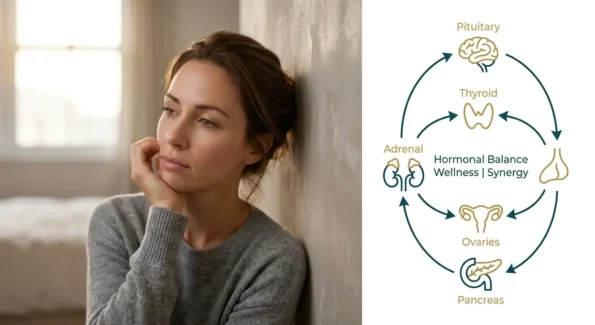
You feel irritable for no clear reason. Your sleep has become unpredictable. You’re gaining weight in places you never did before, and no matter how hard you try, the scale barely budges. Your energy crashes by midday, your brain feels foggy, and your libido has quietly disappeared. You might have chalked all of this up to stress, aging, or just “life getting harder.” But there’s a very real chance something more specific is going on — and it starts with your hormones. Hormonal imbalances after 30 are far more common than most people realize — and they affect both men and women. The tricky part is that the symptoms are often vague, overlapping, and easy to dismiss. In this guide, we’re laying out the 7 most telling signs that your hormones may be out of balance, what’s causing them, and the practical steps you can take to feel like yourself again. ⚡ Key Takeaways • Hormonal imbalances after 30 are extremely common and affect men and women differently but equally. • The 7 signs — from weight gain to brain fog — are your body’s way of signaling that something needs attention. • Key hormones involved include estrogen, progesterone, testosterone, cortisol, thyroid hormones, and insulin. • Blood work is essential: many hormonal imbalances go undetected for years because symptoms are dismissed as ‘just stress.’ • Lifestyle changes — sleep, nutrition, exercise, and stress management — are the foundation of hormonal rebalancing. • Targeted supplements and, in some cases, hormone therapy can be powerful tools when guided by a healthcare provider. 🔬 Why Hormones Start Shifting After 30 Your hormonal system — the endocrine system — is a complex network of glands and chemical messengers that regulate virtually every function in your body, from how you sleep to how you burn fat to how you handle stress. It works beautifully when everything is in balance. But after 30, the balance starts to shift. The Major Players Estrogen and Progesterone: In women, these two hormones begin fluctuating more widely in the early 30s, particularly in the years leading up to perimenopause. Estrogen dominance (too much estrogen relative to progesterone) is one of the most common hormonal patterns in women in their 30s, driven by stress, diet, and environmental factors. Testosterone: Men experience a slow but steady decline in testosterone from their early 30s onward — about 1% per year. Women also produce testosterone in smaller amounts, and even modest drops can significantly affect energy, muscle tone, and sex drive. Cortisol: Chronic stress — the hallmark of modern adult life — keeps cortisol chronically elevated. High cortisol disrupts nearly every other hormone in the body, including thyroid hormones, reproductive hormones, and insulin. Thyroid Hormones: Thyroid dysfunction becomes more common with age, and symptoms often mimic stress or normal aging, causing years of delay in diagnosis. The thyroid sets the metabolic pace for every cell in your body. Insulin: Insulin sensitivity tends to decline in your 30s, particularly with sedentary lifestyles and high-sugar diets. Insulin resistance is now recognized as both a hormonal imbalance and a driver of further hormonal disruption. With that backdrop, here are the 7 most common signs that your hormones are out of balance — and what they’re telling you. SIGN #1  UNEXPLAINED WEIGHT GAIN (ESPECIALLY AROUND THE BELLY) You haven’t changed your diet. You haven’t become less active. But somehow, your clothes are fitting differently — particularly around your midsection. This is one of the most universally reported experiences among people in their 30s, and hormones are almost always a central factor. What’s Happening Hormonally Estrogen dominance in women promotes fat storage, particularly around the hips, thighs, and abdomen. As progesterone levels drop relative to estrogen, the body shifts into a fat-storing rather than fat-burning mode. This is compounded by declining thyroid function, which lowers the metabolic rate across all tissues. In men, declining testosterone reduces muscle mass (muscle burns more calories at rest than fat) while increasing the activity of aromatase, an enzyme that converts testosterone into estrogen. This creates a feedback loop: lower testosterone leads to more body fat, which produces more estrogen, which further suppresses testosterone. Chronically elevated cortisol compounds the problem by triggering cravings for high-calorie foods and directly promoting abdominal fat accumulation. Visceral fat — the deep fat around your organs — is particularly sensitive to cortisol and is also metabolically disruptive in its own right. What to Do SIGN #2  PERSISTENT FATIGUE THAT SLEEP DOESN’T FIX There’s a difference between being tired after a late night and feeling bone-deep exhausted regardless of how much you sleep. The second type — fatigue that doesn’t resolve with rest — is a hallmark of hormonal imbalance. The Hormonal Fatigue Cycle Thyroid hormones regulate how efficiently your cells produce energy. Even subclinical hypothyroidism — thyroid function that’s technically “normal” on basic testing but suboptimal — can leave you in a state of persistent, unrelenting tiredness. Adrenal fatigue — more accurately described as HPA axis dysregulation — occurs when chronic stress has disrupted the natural cortisol rhythm. Normally, cortisol is highest in the morning (energizing you for the day) and lowest at night. When this rhythm is disrupted, you may feel wired at night and exhausted in the morning, no matter how many hours you spend in bed. For women, low progesterone is a common and underdiagnosed cause of fatigue. Progesterone has a calming, GABA-like effect on the brain. When it drops, sleep becomes lighter and less restorative, and daytime energy suffers correspondingly. What to Do SIGN #3  MOOD SWINGS, ANXIETY, AND IRRITABILITY If you’ve been feeling more emotionally reactive than usual — snapping at people you love, feeling waves of anxiety with no clear trigger, or cycling through moods faster than the weather — your hormones may be contributing more than you realize. The Mood-Hormone Connection Estrogen has a profound effect on serotonin, dopamine, and GABA — the neurotransmitters most directly responsible for mood stability and emotional regulation. When estrogen fluctuates (as it does increasingly in

CONTINUE READING ➞

Why Am I Always Tired After 30? 8 Real Reasons (And What to Do)

You wake up after seven or eight hours of sleep and still feel like you could crawl right back under the covers. Your afternoon energy crashes around 2 PM no matter what you do. Coffee used to be optional — now it’s a lifeline. Sound familiar? If you’re over 30 and constantly exhausted, you’re not imagining things. Your body is changing, and what worked in your 20s simply doesn’t cut it anymore. The frustrating part is that most people assume fatigue is just “a part of getting older” and leave it at that. But chronic tiredness after 30 is rarely a mystery with no solution. In most cases, there are clear, science-backed reasons why your energy has taken a nosedive — and, more importantly, real things you can do about it. In this guide, we’re breaking down 8 of the most common culprits behind that constant exhaustion after 30, plus practical strategies to get your energy back. ⚡ Key Takeaways • Hormonal shifts after 30 directly impact energy levels in both men and women. • Poor sleep quality (not just quantity) is one of the biggest hidden causes of fatigue. • Nutritional deficiencies — especially iron, B12, and vitamin D — become more common with age. • Stress and cortisol imbalances drain your energy reserves faster than almost anything else. • A sluggish metabolism and thyroid issues often go undetected well into your 30s. • Small, consistent lifestyle changes can dramatically improve your energy within weeks. 😴 Reason 1: Your Hormones Have Shifted This one surprises most people: hormonal changes don’t just happen at menopause or middle age. By your early 30s, key hormones start to fluctuate in ways that directly sap your energy. What’s Happening in Your Body For women, estrogen and progesterone levels can begin to fluctuate during the late 20s and 30s, especially around the menstrual cycle. These swings cause mood changes, disrupted sleep, and bone-deep fatigue that seems to have no explanation. For men, testosterone starts declining at roughly 1% per year after age 30. Lower testosterone doesn’t just affect libido — it causes reduced stamina, sluggishness, and difficulty recovering from physical or mental effort. Both sexes also see a gradual decline in growth hormone, which plays a key role in cell repair and restoring energy overnight. What You Can Do 🛌 Reason 2: Your Sleep Quality Has Dropped After 30, most people spend less time in the deep, restorative stages of sleep — even if the total hours look fine on paper. You may technically sleep eight hours but only reach deep sleep for a fraction of that time. Why Sleep Architecture Changes After 30 Deep sleep (slow-wave sleep) begins declining in the early 30s and continues steadily. This is the stage where your brain clears metabolic waste, your muscles recover, and your body produces growth hormone. Less deep sleep means you wake up feeling unrested regardless of how long you were in bed. Common culprits that fragment sleep after 30 include stress, blue-light exposure, alcohol, inconsistent schedules, and undiagnosed conditions like sleep apnea — which becomes significantly more common in your 30s. Practical Sleep Fixes 🥗 Reason 3: Nutritional Deficiencies Are Sneaking Up on You Even people who eat well can develop nutritional gaps after 30. The body’s ability to absorb certain nutrients shifts with age, and modern diets often fall short of key vitamins and minerals that fuel your energy. The Most Common Energy-Draining Deficiencies Iron deficiency is one of the leading causes of fatigue, especially in women with heavy periods. Without enough iron, your red blood cells can’t efficiently carry oxygen to your muscles and brain — leaving you feeling sluggish and foggy. Vitamin B12 is essential for nerve function and red blood cell production. Absorption decreases with age, and those following plant-based diets are especially at risk. Low B12 causes profound fatigue, brain fog, and weakness. Vitamin D deficiency is now recognized as an epidemic in the US, affecting an estimated 42% of Americans. Low vitamin D is closely linked to fatigue, low mood, and muscle weakness. If you work indoors and live in a northern climate, you’re especially vulnerable. Magnesium powers over 300 enzymatic reactions in the body, including those that produce ATP — your cells’ primary energy source. Most Americans don’t meet the recommended daily intake. Action Steps 😰 Reason 4: Chronic Stress and Cortisol Overload In your 30s, life tends to get complicated — careers, mortgages, relationships, maybe kids. More responsibilities means more sustained stress, and chronically elevated cortisol is one of the most powerful energy-draining forces your body can experience. How Stress Exhausts You Cortisol is your body’s primary stress hormone. Short bursts of it are normal and healthy. But when it stays elevated day after day, it interferes with sleep, disrupts blood sugar regulation, and taxes your adrenal glands — leaving you in a state of constant low-grade exhaustion. Many people in their 30s experience what’s sometimes called “adrenal fatigue” — a state where the stress-response system becomes dysregulated and your body struggles to produce adequate energy-regulating hormones throughout the day. Stress-Busting Strategies That Actually Work 🦋 Reason 5: Your Thyroid May Be Underperforming The thyroid is a small butterfly-shaped gland in your neck, but it controls the metabolic rate of almost every cell in your body. When it’s underactive — a condition called hypothyroidism — fatigue is almost always the first and most persistent symptom. Why It Becomes a Concern After 30 Thyroid disorders become increasingly common with age, and they frequently go undiagnosed for years. Women are 5-8 times more likely to develop hypothyroidism than men, and it often emerges in the 30s. Beyond fatigue, symptoms include unexplained weight gain, brain fog, cold sensitivity, dry skin, and hair thinning. What to Do 🏃 Reason 6: You’re Not Moving Enough (Or Moving Wrong) It sounds counterintuitive, but one of the most effective ways to fight fatigue is exercise. Sedentary behavior creates a vicious cycle: low energy makes you want to move less, which in

CONTINUE READING ➞
My Cart
Wishlist
Recently Viewed
Categories
Compare Products (0 Products)