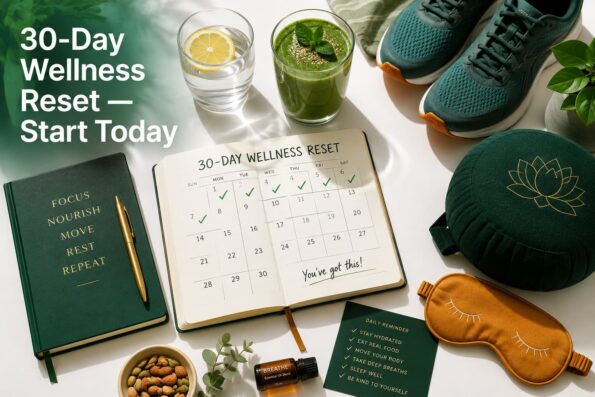
The 30-Day Wellness Reset Plan for People in Their 30s

The 30-Day Wellness Reset Plan for People in Their 30s

There’s a moment many people in their 30s experience — a quiet realization that the body running on autopilot isn’t performing the way it used to. Energy dips that weren’t there before. Sleep that doesn’t fully restore. A few extra pounds that won’t budge no matter how hard you try. A general feeling of running just slightly below your best. This isn’t decline — it’s drift. And the good news is that drift is reversible. Your 30s are not a health plateau you’re stuck on; they’re actually one of the most powerful windows for building habits that will protect and energize your body for the next four decades. This 30-day wellness reset plan is built specifically for adults in their 30s who want to come back to baseline — and then push past it. It covers all four pillars of wellbeing that matter most at this stage of life: nutrition, movement, sleep, and mindset. No extreme dieting. No punishing workout schedules. No unrealistic overhauls. Just 30 days of strategic, science-backed daily actions — broken into weekly phases — that build on each other to create real, lasting change. Let’s reset. Your 30s are one of the best windows for building health habits — the body is still highly responsive, and the stakes are high enough to motivate change. A wellness reset works best when it addresses all four pillars simultaneously: nutrition, movement, sleep, and mindset. The plan is structured in four weekly phases — Foundation, Build, Deepen, Sustain — each with specific daily and weekly targets. Consistency over 30 days creates habit pathways; researchers estimate it takes 21–66 days for a behavior to become automatic. Small, strategic daily actions accumulate into profound change — you don’t need to overhaul everything at once. The goal isn’t to be perfect for 30 days. It’s to build a version of your daily life that supports your health for the long term. 1. Why Your 30s Are the Perfect Time for a Wellness Reset Most people think of their 30s as a time when health slowly starts declining — metabolism slows, recovery takes longer, sleep gets worse. And while some of those biological shifts are real, the framing is completely backwards. Your 30s are not a time to manage decline. They’re a time to invest strategically. Here’s why the 30s represent an especially powerful window for a wellness reset: Your Biology Is Still Highly Adaptable Unlike your 50s or 60s, your body in your 30s still responds rapidly and robustly to training, dietary changes, sleep optimization, and stress management. Muscle builds quickly with resistance training. Metabolic markers improve within weeks of dietary changes. Sleep quality responds fast to behavioral intervention. The adaptation potential is enormous. The Habits You Build Now Compound Over Decades Health habits are like compound interest — their value accumulates over time. A person who establishes strong sleep, nutrition, and exercise habits at 32 arrives at 50 in a completely different biological state than one who doesn’t. The 30-day reset you complete today is an investment that pays dividends for 30+ years. The Cost of Inaction Is Steepest in Your 30s The metabolic, hormonal, and musculoskeletal changes that begin in your 30s — slowing metabolism, declining testosterone or estrogen, decreasing bone density, rising cardiovascular risk — are all significantly modifiable with the right interventions. But they become much harder to reverse if left unaddressed for a decade. Muscle loss begins: Around age 30 — 3–5% per decade without resistance training Metabolism slows: Approx. 2–3% per decade after 30, largely driven by muscle loss Cortisol tends to rise: Chronic stress + busy lifestyle = elevated baseline cortisol by mid-30s The reset window: 30 days of consistent change is enough to see measurable results in all four pillars 2. The Four Pillars of This Wellness Reset This reset is built on four evidence-backed pillars that research consistently shows are the most impactful levers for adult health in the 30–50 age range. They interact and reinforce each other — improving one makes the others easier. Pillar 1: Nutrition Food is information for your body. The reset focuses on removing inflammatory triggers, increasing protein and micronutrient density, stabilizing blood sugar, and building a sustainable eating pattern — not a temporary diet. Pillar 2: Movement Movement in your 30s needs to be strategic. The reset builds a weekly rhythm of strength training, cardiovascular fitness, and active recovery — targeting the muscle preservation, metabolic health, and hormonal benefits your body specifically needs now. Pillar 3: Sleep Sleep is when everything repairs — hormones reset, muscles rebuild, the brain clears waste, and emotional regulation restores. The reset prioritizes sleep architecture by addressing timing, environment, and pre-sleep behavior simultaneously. Pillar 4: Mindset Stress management, emotional wellbeing, and a growth-oriented mindset are not soft extras — they are physiological requirements. Chronic psychological stress directly suppresses immunity, raises cortisol, disrupts sleep, and drives hormonal imbalance. The reset includes daily mindset practices. 3. Before You Begin: Setting Up for Success The difference between a wellness reset that works and one that fizzles by Day 5 is almost always preparation, not willpower. Take these steps before Day 1: Get a Baseline (Optional but Highly Recommended) Clear Your Environment Set Your Non-Negotiable Daily Anchors Choose three behaviors that you commit to doing every single day of the 30-day reset, regardless of how the rest of the day goes. These are your minimum viable wellness commitments — the keystone habits that hold everything else together. Good anchor choices: consistent wake time, 10 minutes of morning movement, and drinking 2L of water before dinner. 4. Week 1 (Days 1–7): Foundation — Clear the Clutter Week 1 is about removing what’s in the way. Before you can build new healthy patterns, you need to reduce the biological noise — the inflammatory foods, erratic sleep, sedentary behavior, and chronic stress response — that’s been suppressing your body’s natural capacity for health. Don’t try to be perfect this week. Focus on starting, staying consistent with your anchors, and

CONTINUE READING ➞
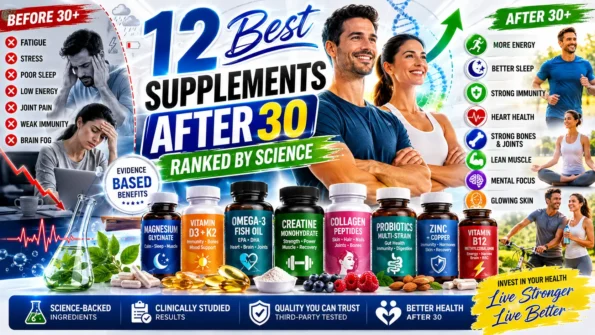
Best Supplements for People Over 30 — Ranked by Science (2025 Guide)

Best Supplements for People Over 30 — Ranked by Science (2025 Guide)

Walk into any supplement store or scroll through any wellness feed and you’ll find hundreds of products promising to reverse aging, ignite your metabolism, balance your hormones, and optimize your performance. The supplement industry is worth over $150 billion globally — and a significant portion of it is built on weak evidence, clever marketing, and the very real anxieties adults over 30 have about their health. That doesn’t mean supplements are useless. Quite the opposite. There is a core group of evidence-based supplements that can genuinely and meaningfully support your health after 30 — filling nutritional gaps that are nearly impossible to close through diet alone, supporting the hormonal and physiological changes that occur in this decade, and addressing deficiencies that silently undermine energy, body composition, and long-term vitality. This guide cuts through the marketing and ranks the 12 best supplements for adults over 30 based on the actual strength and consistency of the clinical evidence behind them. Each is evaluated on the quality of human trials, the magnitude of effect, and the relevance to the specific challenges adults face in this life stage. No hype. Just science. Key Takeaways • Most supplements are poorly evidenced — a small number are exceptionally well-supported by clinical research. • Adults over 30 have specific nutritional needs and deficiency patterns that make certain supplements genuinely high-value. • Magnesium, Vitamin D3, and Omega-3s are the three most universally applicable supplements for this age group. • Evidence tiers matter: a supplement backed by 50 RCTs is very different from one supported by 2 small studies. • Supplements work best as part of a comprehensive approach — they enhance good foundations, they don’t replace them. • Quality varies enormously by brand — third-party testing, bioavailable forms, and transparent labeling are non-negotiable. 🔬 How We Ranked These Supplements Each supplement was evaluated against four criteria weighted by scientific rigor: Evidence rating: 5 Stars = Exceptional (multiple large RCTs, consistent effects) | 4 Stars = Strong (several RCTs, generally consistent results) | 3 Stars = Moderate (some RCTs, promising but developing). 📊 Master Ranking Table — All 12 Supplements at a Glance Rank Supplement Evidence Primary Benefits #1 Magnesium Glycinate 5 Stars Sleep, cortisol, muscle, energy #2 Vitamin D3 + K2 5 Stars Immunity, hormones, bones, mood #3 Omega-3 Fish Oil (EPA/DHA) 5 Stars Heart, brain, inflammation, joints #4 Creatine Monohydrate 5 Stars Muscle, strength, brain, metabolism #5 Ashwagandha (KSM-66) 4 Stars Cortisol, testosterone, anxiety, sleep #6 Vitamin B12 (Methylcobalamin) 4 Stars Energy, nerves, brain, red blood cells #7 Collagen Peptides + Vitamin C 4 Stars Joints, skin, gut, connective tissue #8 Zinc + Copper 4 Stars Testosterone, immunity, thyroid, skin #9 Probiotic (Multi-Strain) 4 Stars Gut health, immunity, metabolism, mood #10 CoQ10 (Ubiquinol) 3 Stars Cellular energy, heart, anti-aging #11 Berberine 4 Stars Blood sugar, cholesterol, gut, weight #12 L-Theanine 3 Stars Focus, calm, sleep, stress relief #1  MAGNESIUM GLYCINATE Evidence Tier: 5 Stars — Exceptional: Multiple large RCTs, consistent across populations The most universally relevant supplement for adults over 30 — and the most commonly deficient. Magnesium participates in over 300 enzymatic reactions — including every step of ATP production, DNA synthesis, muscle contraction and relaxation, blood sugar regulation, and neurotransmitter function. It is, without exaggeration, the mineral that keeps your cells running. And most adults aren’t getting enough of it. Surveys consistently show that 48-68% of US adults consume less magnesium than recommended — a pattern worsened by modern processed diets. The consequences directly match the most common complaints in adults over 30: poor sleep, anxiety, muscle cramps, fatigue, elevated blood pressure, and insulin resistance. What the Research Shows Why Glycinate Specifically Magnesium oxide — found in most cheap supplements — has approximately 4% absorption and frequently causes digestive distress. Magnesium glycinate binds magnesium to the amino acid glycine, producing dramatically superior absorption and tolerability. Glycine itself also has calming properties, making evening supplementation ideal for sleep support. Key Benefit Best For Typical Dose Best Form Sleep, calm, muscle, energy, blood sugar Almost all adults 30+ (deficiency is near-universal) 300-400mg elemental magnesium at night Glycinate or malate — avoid oxide #2  VITAMIN D3 + K2 Evidence Tier: 5 Stars — Exceptional: Extensive RCT data across multiple health outcomes Functions more like a hormone than a vitamin — and most adults over 30 are running deficient. Vitamin D activates receptors in virtually every tissue type in the body and regulates over 1,000 genes. Its influence spans immune function, bone density, muscle function, testosterone production, insulin sensitivity, mood regulation, and cardiovascular health. Despite its importance, an estimated 41-50% of American adults are deficient — and a much higher proportion of indoor-dwelling adults over 30 fall below optimal levels. Standard labs consider anything above 20 ng/mL as ‘sufficient’; functional research identifies 50-80 ng/mL as the optimal range for health outcomes. The D3 + K2 Combination Vitamin D3 is the biologically active, superior-absorbing form over D2. Vitamin K2 (as MK-7) is a critical partner: D3 significantly increases calcium absorption, but without K2, that calcium can deposit in arteries rather than bones. D3 and K2 should always be taken together. Key Research Findings Key Benefit Best For Typical Dose Best Form Immunity, bones, mood, hormones, metabolism Virtually all indoor-dwelling adults 30+ 2,000-5,000 IU D3 + 90-200 mcg K2 (MK-7) daily D3 (cholecalciferol) + K2 as MK-7 #3  OMEGA-3 FATTY ACIDS (EPA/DHA) Evidence Tier: 5 Stars — Exceptional: Thousands of studies; among the most researched nutrients in existence Anti-inflammatory, cardioprotective, brain-supportive — and most adults are chronically deficient. EPA and DHA are essential fats — your body cannot synthesize them — that form the structural building blocks of cell membranes throughout the body, with particularly high concentrations in the brain, eyes, and heart. They are also the precursors to anti-inflammatory signaling molecules that counteract the chronic inflammation increasingly recognized as a root driver of virtually every major chronic disease. The modern Western diet has a dramatically skewed omega-6 to omega-3 ratio — estimated at 15:1 to 20:1, versus the roughly

CONTINUE READING ➞

The 10 Health Tests Everyone Over 30 Should Get (Doctor-Approved Checklist)

Most serious health conditions don’t announce themselves with dramatic symptoms. High blood pressure earns the nickname “the silent killer” because it causes almost no discomfort while quietly damaging your heart, kidneys, and arteries for years. Pre-diabetes affects nearly 1 in 3 American adults — and more than 80% of them have no idea. Thyroid disease, vitamin deficiencies, high cholesterol, early hormonal imbalances — all of them can quietly undermine your health, energy, and longevity long before you feel a thing. This is exactly why your 30s are the most important decade to get serious about preventive screening. You’re past the point where youth automatically compensates for lifestyle gaps, and you’re early enough to catch and correct problems before they compound into something much harder to treat. The good news: you don’t need a complicated or expensive strategy. You need the right tests — done at the right intervals — and a healthcare provider willing to look beyond the basics. In this guide, we’re covering the 10 essential health tests every adult over 30 should have, what each one actually measures, what the results mean, and how often you need them. ⚡ Key Takeaways • Many of the most serious health conditions — heart disease, diabetes, thyroid disease — are silent until advanced stages. • Your 30s are the critical window to establish your health baseline and catch early warning signs. • Most of these tests are covered by insurance as part of routine preventive care — there’s no reason to skip them. • Standard annual physicals often don’t include all of these tests; you may need to specifically request them. • Results in the ‘normal’ range aren’t always optimal — learn to understand the difference. • These tests work best as a system: patterns across multiple markers tell a fuller story than any single number. 🎯 Why Preventive Testing After 30 Is a Game-Changer There’s a critical difference between reactive medicine — treating problems after they become symptomatic — and preventive medicine, which catches problems at the stage when they’re most treatable and often fully reversible. Your 30s are the ideal time to shift from one to the other. Consider the trajectory of metabolic disease. Insulin resistance — the precursor to type 2 diabetes — typically begins developing 10-15 years before a diabetes diagnosis. During those years, it’s silently contributing to weight gain, fatigue, hormonal disruption, and cardiovascular risk. A single fasting insulin test can detect it years before standard glucose tests show any problem. The same principle applies to cardiovascular risk, thyroid dysfunction, hormonal imbalances, and nutritional deficiencies. Catching them early doesn’t just prevent the disease — it gives you the information needed to make targeted lifestyle changes that work, rather than guessing. One more critical point: your standard annual physical often doesn’t include most of these tests. Insurance covers them as preventive care, but you need to ask specifically. Walk into your next appointment with this list. 📊 The Master Checklist at a Glance Test How Often What It Catches #1  Complete Blood Count (CBC) Annually Anemia, infection, immune issues #2  Comprehensive Metabolic Panel Annually Blood sugar, kidney, liver function #3  Full Lipid Panel (Cholesterol) Every 1-2 years LDL, HDL, triglycerides #4  Fasting Insulin & HbA1c Annually Insulin resistance, pre-diabetes #5  Full Thyroid Panel Every 1-2 years TSH, Free T3/T4, antibodies #6  Vitamin D, B12 & Ferritin Annually Common deficiencies & fatigue drivers #7  Hormonal Panel Annually or as needed Estrogen, testosterone, cortisol #8  Blood Pressure & Resting Heart Rate At every visit Silent hypertension #9  Body Composition & Metabolic Age Every 6-12 months Visceral fat, muscle mass ratio #10 Skin, Eye & Dental Screening Annually Cancer, vision, gum disease TEST #1  COMPLETE BLOOD COUNT (CBC) Your body’s foundational health snapshot — anemia, infection, immune function, and more. The Complete Blood Count is one of the most ordered lab tests in medicine — and for good reason. It provides a comprehensive look at three major cell types in your blood: red blood cells (which carry oxygen), white blood cells (which fight infection), and platelets (which enable clotting). Individually and together, these markers paint a detailed picture of your baseline health. What It Detects In adults over 30, a CBC most commonly reveals iron-deficiency anemia — particularly in women with heavy periods. Anemia is one of the leading causes of persistent fatigue, weakness, and brain fog, and it’s frequently missed because the symptoms are so nonspecific. A CBC also detects infections, inflammatory conditions, clotting disorders, and early signs of immune system dysfunction. Abnormal white blood cell counts can indicate everything from a simple viral illness to autoimmune conditions or, in rare cases, hematological cancers. Platelet abnormalities can indicate bleeding disorders or inflammatory diseases. As a routine screen, the CBC is both incredibly broad and surprisingly revealing. What to Ask For 📋 Ask For CBC with differential 🔁 Frequency Annually ⚠️ Watch For Low hemoglobin, high WBC, low platelets TEST #2  COMPREHENSIVE METABOLIC PANEL (CMP) The report card for your liver, kidneys, blood sugar, and electrolyte balance. The Comprehensive Metabolic Panel gives your doctor a window into the health of your most vital organ systems. It measures 14 different biomarkers covering blood glucose, kidney function, liver function, and electrolyte and fluid balance — all in a single blood draw. What It Detects Blood glucose (fasting) within the CMP gives a snapshot of your blood sugar at a single point in time — an early warning for pre-diabetes or diabetes. Kidney markers (BUN and creatinine) assess how well your kidneys are filtering waste from your blood. Liver enzymes (ALT, AST, ALP) detect liver stress from alcohol, medications, non-alcoholic fatty liver disease (NAFLD), or other causes. NAFLD is now estimated to affect approximately 25% of American adults and is strongly linked to insulin resistance, metabolic syndrome, and excess visceral fat. It causes no symptoms in its early stages and is most commonly detected through elevated liver enzymes on a routine CMP. Electrolyte levels (sodium, potassium, calcium, bicarbonate) reveal hydration status, kidney

CONTINUE READING ➞
10 Health Changes That Happen to Your Body After 30: What Every Adult Should Know

10 Health Changes That Happen to Your Body After 30: What Every Adult Should Know

Introduction For many people, the age of 30 marks a meaningful transition from the carefree energy of young adulthood into a more mature, responsibility-laden stage of life. While aging is an inevitable natural process, the body begins undergoing several significant physiological shifts during this decade that can affect energy levels, weight management, physical performance, mental health, and overall quality of life. These changes do not happen all at once, and they are rarely dramatic in the short term. Instead, they accumulate gradually — sometimes going unnoticed for years — until a person finds that they can no longer eat the same way they did at 22 without gaining weight, or that they feel soreness after workouts they would have shrugged off a decade earlier. These experiences are not imagined; they reflect real, measurable biological shifts. The good news is that most of these changes are manageable. With the right lifestyle habits — including balanced nutrition, consistent exercise, quality sleep, and preventive healthcare — you can maintain excellent health and energy well into your 40s, 50s, and beyond. In this comprehensive guide, we will explore the 10 most important health changes that happen to your body after 30, explain why they occur, and provide practical, evidence-based strategies to help you stay healthy and active for decades to come. 1. Your Metabolism Begins to Slow Down What Happens? One of the most commonly noticed health changes after 30 is a gradual decrease in metabolic rate — the speed at which your body burns calories to fuel basic functions like breathing, circulation, and cell repair. In your twenties, a naturally higher metabolism means your body burns through energy relatively quickly even at rest. As you enter your thirties, however, this baseline calorie-burning slows down, and the effects can be surprisingly significant over time. This slowdown is not dramatic from one day to the next, but its cumulative impact over months and years becomes very real. Many people find that they gain weight more easily, feel less energetic throughout the day, and struggle to shed extra pounds despite not changing their diet or exercise habits. The body is simply operating at a lower metabolic intensity than it once did. Why It Happens Several interconnected factors drive this slowdown. The most significant is the gradual loss of lean muscle mass — muscle tissue is metabolically active and burns more calories at rest than fat tissue does. As muscle mass decreases, fewer calories are burned passively throughout the day. Hormonal changes also play a role: testosterone and estrogen, both of which support muscle maintenance and metabolic efficiency, begin to decline after 30. Additionally, many adults become less physically active as professional and family responsibilities grow, and sedentary behavior further suppresses metabolism. The result is a compound effect — less muscle, less activity, and less hormonal support all working together to slow calorie burning. How to Manage It The most effective strategy to counter a slowing metabolism is strength training. Building and preserving lean muscle through resistance exercises — such as weight lifting, bodyweight workouts, or resistance band training — directly increases your resting metabolic rate, helping your body burn more calories even when you are not exercising. Aim for at least two to three strength sessions per week. Beyond formal workouts, increasing your overall daily movement is highly effective. Simple habits like walking more frequently, taking stairs instead of elevators, using a standing desk, or even pacing during phone calls can meaningfully boost your total daily energy expenditure. These small choices add up significantly over weeks and months. Nutrition also plays a crucial role. Prioritizing protein at every meal helps preserve muscle mass, supports feelings of fullness, and requires more energy to digest than carbohydrates or fats — a property known as the thermic effect of food. Whole, unprocessed foods support a healthier metabolic environment compared to highly processed, calorie-dense alternatives. 2. Muscle Mass Starts Declining What Happens? After age 30, adults who are not actively engaged in resistance training may begin to lose approximately 3 to 8 percent of their muscle mass per decade. This gradual process — medically known as sarcopenia — is one of the most consequential age-related changes because muscle plays a vital role in almost every aspect of physical health and independence. The decline is typically subtle at first. You might notice slightly reduced strength when performing tasks that once felt easy, or greater fatigue after physical activity. Over time, however, the loss of muscle mass has deeper implications: it contributes to slower metabolism, weakened joints, impaired balance, and ultimately, a reduced ability to perform daily activities independently as you age. Why Muscle Matters Muscle tissue is far more than just the engine behind physical strength. It serves as the body’s primary calorie-burning engine, helps protect and stabilize joints against injury, plays a central role in maintaining healthy blood sugar levels by absorbing glucose from the bloodstream, and supports cardiovascular health through regular physical activity. Preserving muscle mass throughout your thirties and forties is one of the most powerful investments you can make in your long-term quality of life. Prevention Strategies Engaging in resistance training two to four times per week is the gold standard for preventing sarcopenia. Compound movements that work multiple muscle groups simultaneously — such as squats, deadlifts, push-ups, rows, and lunges — are particularly effective. These exercises not only build muscle but also improve coordination, bone density, and joint stability. Nutrition is equally important. Consuming adequate protein — ideally distributed across all meals of the day rather than concentrated in a single sitting — provides the amino acids your muscles need for repair and growth. Most adults benefit from aiming for approximately 1.2 to 1.6 grams of protein per kilogram of body weight daily, though individual needs vary. Foods like eggs, lean meats, fish, dairy, legumes, and tofu are excellent sources. 3. Bone Density Gradually Decreases What Happens? The human skeleton reaches its peak bone mass around the age of 30. After this point, the balance

CONTINUE READING ➞
My Cart
Wishlist
Recently Viewed
Categories
Compare Products (0 Products)