

You’re hitting the gym, sleeping reasonably well, and keeping stress in check — but something still feels off. You’re more tired than usual, your mood is unpredictable, and the body you worked hard for seems harder to maintain. Sound familiar?
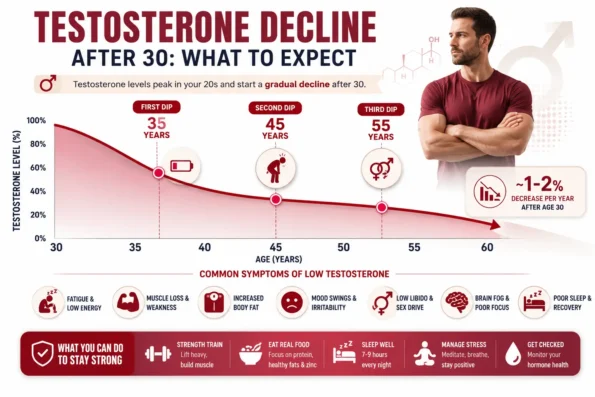
You’re not imagining it. After age 30, testosterone — the hormone that defines much of what makes a man feel like himself — begins a slow, steady decline. Research shows that testosterone levels drop by roughly 1% per year starting in the early 30s. By the time many men hit 40 or 50, they’re running on significantly lower levels than they were in their prime.
The problem? testosterone drop after 30! Most men chalk these symptoms up to stress, aging, or ‘just feeling tired.’ They never connect the dots back to their hormones. And that delay in recognition can cost them years of energy, strength, vitality, and wellbeing.
This guide breaks down exactly what happens to testosterone after 30, the symptoms you should never ignore, why it matters for your long-term health, and the practical steps you can take — starting today — to reclaim your hormonal health naturally.
| Testosterone naturally decreases by about 1% per year after age 30 — it’s a biological reality, not a failure. |
| Common symptoms include fatigue, low libido, mood swings, weight gain, and muscle loss — often mistaken for stress or aging. |
| Lifestyle factors like poor sleep, chronic stress, and a bad diet accelerate testosterone decline significantly. |
| Compound exercises like squats and deadlifts are among the most powerful natural testosterone boosters available. |
| Key nutrients — zinc, vitamin D, magnesium — play a direct role in testosterone production and can be optimized through diet or supplements. |
| If symptoms are severe or persistent, a simple blood test can confirm low testosterone and open the door to medical or natural treatment. |
1. What Is Testosterone and Why Does It Drop After 30?
Testosterone is the primary male sex hormone, produced mainly in the testes and regulated by a complex feedback system involving the brain and pituitary gland. It’s responsible for a wide range of functions — far beyond just sex drive.
Peak testosterone levels occur in your late teens and early 20s. After that, levels plateau and then begin declining gradually. While the rate varies by individual, the clinical consensus is that most men experience a 1–2% annual decline starting somewhere between ages 30 and 35.
What Testosterone Controls in Your Body
- Muscle protein synthesis and muscle mass maintenance
- Fat distribution and metabolic rate
- Libido and sexual function
- Mood, motivation, and cognitive sharpness
- Bone density and joint health
- Red blood cell production and cardiovascular health
- Energy levels and recovery after exercise
This broad influence is exactly why low testosterone affects so many areas of life simultaneously — and why it’s often misdiagnosed or overlooked.
| Normal Range (Ages 30–45): | 400–900 ng/dL (nanograms per deciliter) |
| Low T Threshold: | Below 300 ng/dL (clinical hypogonadism) |
| How to Test: | Morning blood draw; results available within 24–48 hours |
2. The Top Warning Signs of Low Testosterone in Men
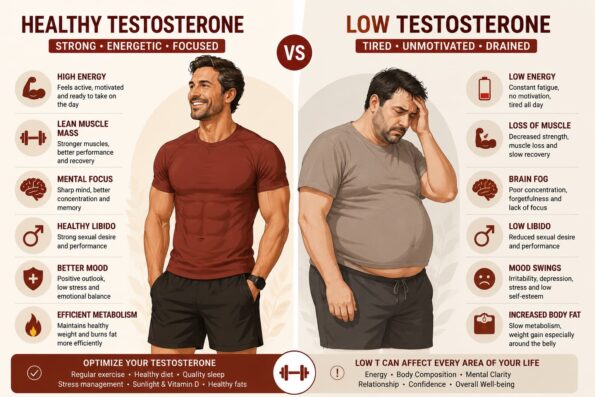
One of the most frustrating things about declining testosterone is how gradually it happens. There’s no single day when you wake up and feel dramatically different. Instead, symptoms creep in slowly — often over months or years — making them easy to dismiss.
Here are the key symptoms every man over 30 should be aware of:
Physical Symptoms
- Persistent fatigue — even after a full night’s sleep
- Noticeable loss of muscle mass despite regular exercise
- Increased body fat, especially around the belly and chest
- Reduced strength and endurance during workouts
- Slower recovery from exercise or injury
- Hair thinning or loss (body and facial hair)
- Reduced bone density, leading to increased fracture risk
Sexual Symptoms
- Decreased libido or sex drive
- Difficulty achieving or maintaining erections
- Reduced ejaculation volume
- Fertility issues (low sperm count)
Emotional and Cognitive Symptoms
- Mood swings, irritability, or feeling ‘flat’
- Depression, anxiety, or low motivation
- Brain fog, poor concentration, or memory lapses
- Loss of competitive drive or ambition
| Important Note Experiencing one or two of these symptoms occasionally doesn’t necessarily mean you have low testosterone. However, if several of these symptoms are persistent and affecting your quality of life, it’s worth getting your levels tested. A simple morning blood test is all it takes. |
3. How Low T Affects Your Body Composition and Metabolism
If you’ve noticed your body changing in ways that diet and exercise don’t seem to fix, testosterone could be the underlying culprit. Low testosterone has a profound and direct impact on how your body stores fat and builds muscle.
The Muscle-Fat Tradeoff
Testosterone drives muscle protein synthesis — the process by which your body repairs and builds muscle fibers after exercise. When T-levels drop, this process slows down. You may find that you’re working just as hard in the gym but seeing fewer results. Worse, the muscle you’ve built becomes harder to maintain.
At the same time, low testosterone is associated with increased visceral fat — the dangerous kind that accumulates around your organs and drives inflammation, insulin resistance, and cardiovascular risk.
The Metabolic Cascade
- Lower muscle mass reduces your resting metabolic rate — you burn fewer calories at rest
- Increased visceral fat raises estrogen levels in men, further suppressing testosterone
- Insulin sensitivity decreases, making blood sugar regulation harder
- Energy levels drop, making physical activity feel more exhausting
This creates a vicious cycle: low testosterone leads to more fat, more fat leads to more estrogen, more estrogen suppresses testosterone further. Breaking this cycle requires addressing testosterone directly — not just calorie restriction.
4. The Mental Health Side Nobody Talks About
The conversation around testosterone is almost always about muscles and sex drive. But the mental health implications of declining testosterone are equally significant — and far less discussed.
Testosterone receptors exist throughout the brain, including in regions responsible for mood regulation, motivation, and emotional processing. When T-levels fall, the neurochemical balance shifts in ways that can profoundly affect how you feel, think, and relate to the world.
Testosterone and Depression
Studies have found a strong correlation between low testosterone and clinical depression in men. In many cases, men who don’t respond to antidepressants are found to have low testosterone — and when their levels are restored, mood improves significantly. This doesn’t mean every depressed man has low T, but it’s a variable worth exploring.
Motivation, Drive, and Identity
Many men with low testosterone describe losing their competitive edge — the drive to pursue goals, lead, build, and create. This isn’t just about ambition. Testosterone is tied to dopaminergic function, the brain’s reward system. Lower T can dull the satisfaction you get from achievement, making everything feel a bit pointless.
- Loss of competitive drive or goal-orientation
- Difficulty feeling motivated for hobbies or work projects
- Increased social withdrawal or desire for isolation
- Reduced ability to handle stress without becoming overwhelmed
5. Key Lifestyle Factors That Accelerate Testosterone Decline
While age-related testosterone decline is natural, many men are losing testosterone far faster than necessary — thanks to modern lifestyle patterns that actively suppress hormonal health.
Chronic Sleep Deprivation
Most testosterone is produced during deep sleep — specifically during REM cycles in the early morning hours. Studies show that men who sleep fewer than 5 hours per night can see testosterone levels drop by 10–15% in just one week. Consistently sleeping less than 7 hours is one of the fastest ways to suppress your T-levels.
Chronic Stress and Cortisol
Cortisol and testosterone operate on a see-saw. When cortisol goes up — due to work stress, relationship conflict, financial worry, or overtraining — testosterone goes down. Chronically elevated cortisol essentially tells your body that survival mode is more important than reproduction or muscle-building.
Poor Diet Choices
- Diets high in processed foods and trans fats lower testosterone
- Excessive sugar intake raises insulin, which suppresses T-production
- Alcohol — especially heavy drinking — directly inhibits testosterone synthesis
- Low dietary fat intake deprives the body of cholesterol needed for hormone production
Sedentary Behavior
A lack of physical activity — especially resistance training — removes one of the most powerful natural stimuli for testosterone production. Men who sit for most of the day have measurably lower testosterone than those who are consistently physically active.
Environmental Estrogens (Xenoestrogens)
Chemicals found in plastics (BPA), certain pesticides, and personal care products can mimic estrogen in the body, disrupting the hormonal balance and suppressing testosterone. These endocrine disruptors are pervasive in the modern environment.
6. How to Naturally Boost Testosterone After 30
The good news: you have far more control over your testosterone levels than you may realize. Natural interventions, when done consistently, can meaningfully slow the rate of decline and even increase levels in men who’ve let lifestyle factors erode their hormonal health.
Prioritize Compound Strength Training
Heavy compound movements — squats, deadlifts, bench press, rows — are among the most powerful natural testosterone stimulants available. They engage large muscle groups, trigger significant hormonal response, and signal the body to produce more testosterone. Aim for 3–4 strength training sessions per week with progressive overload.
Sleep 7–9 Hours Every Night
This is non-negotiable for hormonal health. Prioritize sleep hygiene: keep your bedroom cool and dark, avoid screens 60 minutes before bed, maintain a consistent sleep schedule, and consider tracking your sleep quality with a wearable device.
Eat for Testosterone
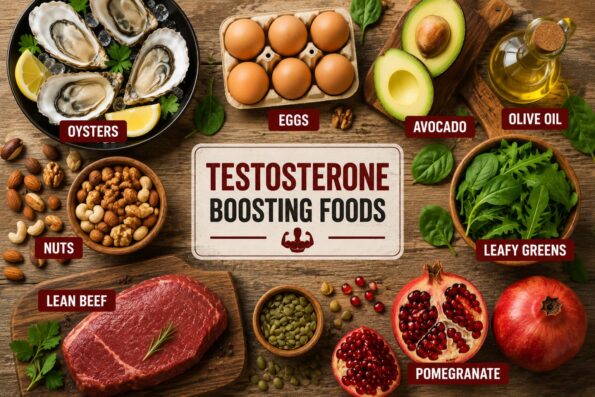
- Include dietary fat from healthy sources: eggs, avocado, olive oil, nuts, fatty fish
- Eat adequate protein (0.7–1g per pound of bodyweight) to support muscle and hormone synthesis
- Add zinc-rich foods: oysters, beef, pumpkin seeds, lentils
- Include magnesium: leafy greens, dark chocolate, almonds, black beans
- Eat cruciferous vegetables to support estrogen metabolism: broccoli, cauliflower, kale
Manage Stress Actively
Incorporate stress-management practices that measurably lower cortisol: daily walks in nature, breathwork or meditation, social connection, journaling, and periodic digital detoxes. Even 20 minutes of daily outdoor activity has been shown to lower cortisol and improve testosterone levels.
Limit Alcohol and Avoid Endocrine Disruptors
Cut alcohol consumption to no more than 1–2 drinks per day. Switch to glass or stainless steel containers when possible. Choose organic produce for the ‘dirty dozen’ high-pesticide fruits and vegetables. Use natural personal care products where possible.
7. Supplements That Support Healthy Testosterone Levels
Supplements are not a replacement for lifestyle change — but for men over 30 whose diets leave nutritional gaps, targeted supplementation can meaningfully support testosterone production and overall hormonal health.
Evidence-Backed Testosterone-Supporting Nutrients
- Zinc: Essential for testosterone synthesis. Deficiency is directly correlated with low T. Dose: 25–45 mg/day.
- Vitamin D3: Functions more like a hormone than a vitamin. Men with low vitamin D3 consistently show lower testosterone. Dose: 2,000–5,000 IU/day (with vitamin K2).
- Magnesium: Involved in over 300 enzymatic reactions including testosterone production. Magnesium glycinate is the most bioavailable form. Dose: 300–400 mg/day.
- Ashwagandha (KSM-66): An adaptogen shown in multiple clinical trials to reduce cortisol and significantly raise testosterone levels in men. Dose: 600 mg/day.
- D-Aspartic Acid (DAA): An amino acid that stimulates LH (luteinizing hormone), which signals the testes to produce more testosterone. Most effective in men with lower baseline levels.
- Fenugreek Extract: Shown to inhibit enzymes that convert testosterone to estrogen, helping maintain free testosterone levels.
| Supplement Spotlight: TestoGen For men looking for a comprehensively formulated testosterone support supplement, TestoGen combines D-Aspartic Acid, Ashwagandha, Zinc, Vitamin D3, Fenugreek, and Magnesium in clinically studied doses. It’s designed specifically for men over 30 who want to support healthy testosterone levels naturally, without hormonal therapy. As always, consult your doctor before starting any new supplement regimen. |
8. Common Mistakes Men Make With Low Testosterone
Even men who are aware of declining testosterone often make avoidable mistakes that slow their recovery or make the problem worse. Here’s what to watch out for:
Mistake 1: Ignoring the Symptoms
The most common mistake is chalking symptoms up to ‘getting older’ and doing nothing about it. Low testosterone is not an inevitable and untreatable part of aging. It’s a hormonal state that responds well to intervention.
Mistake 2: Only Doing Cardio
Cardio is great for cardiovascular health, but it’s not a strong testosterone stimulus. Men who only do steady-state cardio while neglecting resistance training are missing the single most powerful natural T-booster available. Chronic excessive cardio can even suppress testosterone.
Mistake 3: Skimping on Dietary Fat
Fear of dietary fat — a legacy of the low-fat diet era — can suppress testosterone. Cholesterol is the raw material from which steroid hormones (including testosterone) are synthesized. A diet chronically low in fat and cholesterol limits how much testosterone your body can produce.
Mistake 4: Overlooking Sleep Quality
Many men focus on exercise and nutrition while completely ignoring sleep. Sleep is when testosterone is produced. Six hours of sleep may feel sufficient, but it’s suppressing your hormones in ways you might not immediately notice.
Mistake 5: Self-Diagnosing Without Testing
Some men assume they have low testosterone based on symptoms, while others dismiss the possibility despite obvious signs. Neither approach is helpful. A simple blood test — typically ordered by your primary care doctor or a men’s health clinic — gives you an objective number to work with.
Mistake 6: Expecting Overnight Results
Natural testosterone optimization is a long game. Lifestyle changes take 8–12 weeks to produce measurable improvements in T-levels. Men who try one approach for two weeks, see no dramatic shift, and give up are setting themselves up for failure.
9. Frequently Asked Questions
| ❓ At what age does testosterone start dropping significantly? |
| Most men begin to see a gradual decline starting around age 30–35, with approximately 1% lost per year. However, the rate varies widely based on genetics, lifestyle, and health status. Some men maintain healthy levels well into their 50s; others see more significant drops by their late 30s. A blood test is the only way to know your actual level. |
| ❓ Can you raise testosterone naturally without TRT (Testosterone Replacement Therapy)? |
| Yes — especially for men with low-normal levels. Consistent strength training, quality sleep, stress management, dietary optimization (adequate fat, zinc, vitamin D, magnesium), and targeted supplementation can produce meaningful improvements in testosterone over 8–12 weeks. For clinically low testosterone (below 300 ng/dL with symptoms), TRT may be warranted and should be discussed with a physician. |
| ❓ What is a normal testosterone level for a 35-year-old man? |
| The generally accepted normal range for adult men is 300–1,000 ng/dL, with optimal levels for men in their 30s often falling between 500–800 ng/dL. However, ‘normal’ is a range, not a single number — and symptoms matter as much as the lab value. Some men feel fine at 400 ng/dL; others feel symptomatic at the same level. |
| ❓ Does testosterone affect mental health and mood? |
| Significantly. Testosterone receptors are found throughout the brain, and low T is associated with depression, irritability, anxiety, brain fog, and reduced motivation. Multiple studies have found that testosterone optimization — whether through lifestyle changes or TRT — improves mood, cognitive function, and overall sense of wellbeing in men with low levels. |
| ❓ How long does it take to see results from natural testosterone boosting? |
| Most men notice early improvements in energy and mood within 4–6 weeks of consistent lifestyle changes. Measurable improvements in testosterone levels via blood test typically appear after 8–12 weeks of sustained effort. Muscle composition and libido changes may take 3–6 months to become clearly apparent. |
10. Your 5-Step Testosterone Recovery Action Plan
You don’t need to overhaul your entire life overnight. Start with these five evidence-backed steps and build momentum from there:
| Get Tested First Schedule a morning blood test with your doctor to check total and free testosterone, along with SHBG and LH. You can’t optimize what you don’t measure — and your results will guide every decision you make from here. |
| Start Strength Training 3x Per Week Prioritize compound movements: squats, deadlifts, bench press, and rows. Use progressive overload — gradually increasing weight over time. This is your most powerful natural testosterone tool. |
| Lock In 7–9 Hours of Quality Sleep Set a consistent bedtime and wake time. Keep your room cool (65–68°F), dark, and screen-free. Consider a magnesium glycinate supplement before bed to support deep sleep and testosterone production simultaneously. |
| Rebuild Your Diet Around Testosterone-Friendly Foods Eliminate trans fats and processed foods. Add eggs, fatty fish, avocado, nuts, oysters, and leafy greens. Eat adequate dietary fat (at least 25–30% of total calories). Limit alcohol to 1–2 drinks per week at most. |
| Add a Targeted Supplement Stack Start with the foundation: Vitamin D3 (3,000 IU), Zinc (30 mg), and Magnesium Glycinate (300 mg) daily. After 4 weeks, consider adding Ashwagandha (KSM-66, 600 mg). Reassess your blood levels after 12 weeks. |
Conclusion
Testosterone decline after 30 is real, measurable, and — crucially — manageable. You don’t have to accept fatigue, low drive, mood swings, and body composition changes as inevitable features of getting older. They are symptoms of a hormonal shift that responds well to the right interventions.
The men who thrive in their 40s, 50s, and beyond are not the ones with perfect genetics. They’re the ones who pay attention, take action early, and treat their hormonal health as a non-negotiable priority — right alongside diet, exercise, and sleep.
Start with a blood test. Commit to the lifestyle fundamentals. Fill your nutritional gaps with targeted supplementation. And give it time — because the version of you that feels energized, sharp, strong, and motivated is still very much within reach.
| Medical Disclaimer This article is intended for informational and educational purposes only and does not constitute medical advice. The content should not be used as a substitute for professional medical guidance, diagnosis, or treatment. Always consult a qualified healthcare provider before making changes to your diet, exercise routine, or supplement regimen, especially if you have an existing medical condition or are currently taking prescription medications. Testosterone levels and hormonal health vary by individual — a physician-ordered blood test is the only reliable way to assess your specific situation. |