
An Ayurvedic blood-sugar-support juice, reviewed for what actually matters: ingredients, evidence, and everyday use.
If you’re over 30, you already know blood sugar isn’t just a “diabetes” issue — it quietly shapes energy, appetite, and how stubborn belly fat becomes. So when a natural product claims to help regulate it, it’s fair to ask: does it actually work, or is it just another wellness bottle with good marketing?
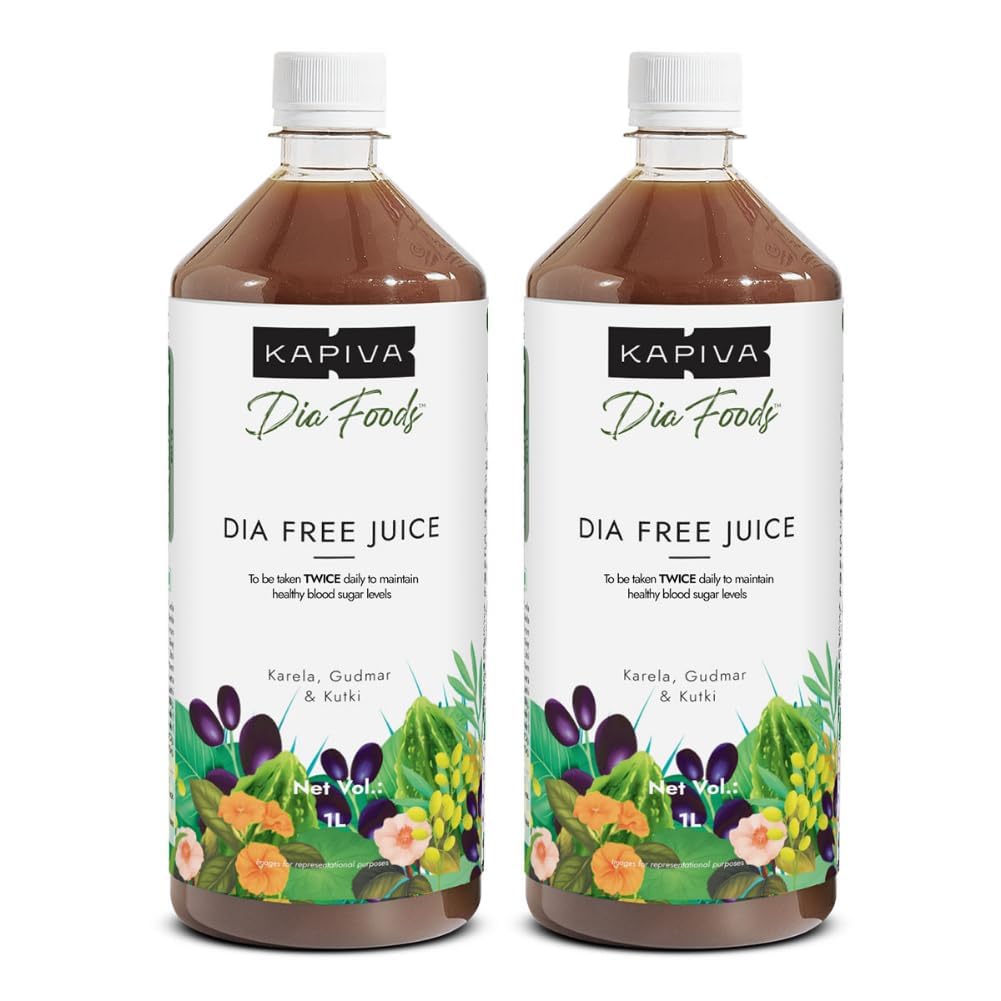
Kapiva Dia Free Juice is one of the more talked-about Ayurvedic options in this space. It’s built around a blend of herbs — karela, jamun, amla, gudmar, and more — that have been used in traditional Indian medicine for generations to support glucose metabolism.
This review breaks down what’s actually in the bottle, what the ingredient science says, how to use it correctly, and who it’s realistically a good fit for — without the exaggerated before-and-after claims you’ll find elsewhere.
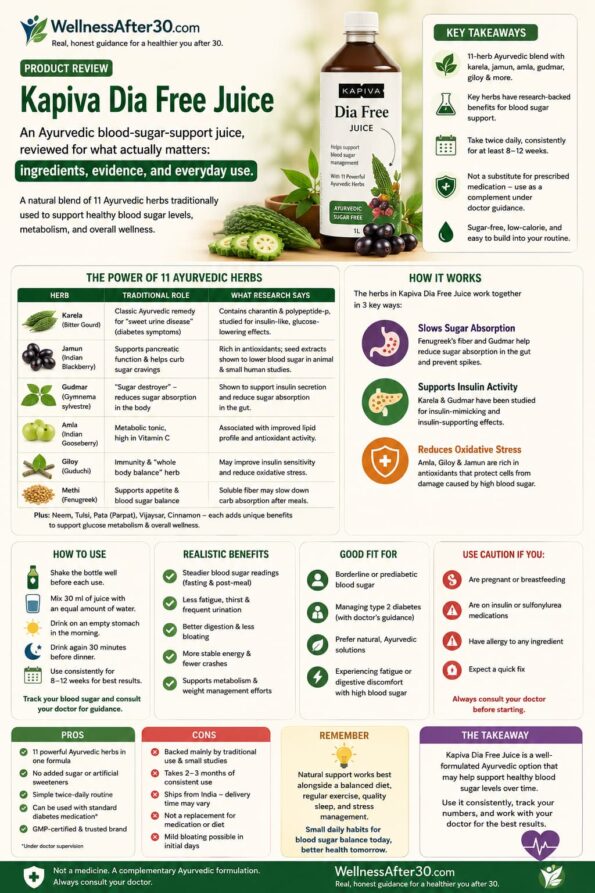
| Key Takeaways Kapiva Dia Free Juice is an 11-herb Ayurvedic blend built around karela, jamun, amla, gudmar, and giloy — ingredients with a long traditional history in blood sugar support.Several of its core herbs (bitter gourd, gudmar, giloy) have documented glucose-metabolism effects in smaller clinical and preclinical studies, though large independent human trials are limited. It’s meant to be taken twice daily, consistently, for at least 8–12 weeks before drawing conclusions.It is not a substitute for prescribed diabetes medication — it’s positioned as a complementary, doctor-approved addition. It’s a reasonable option to discuss with your doctor if you’re managing borderline or diagnosed blood sugar issues and want a natural, sugar-free addition to your routine. |
1. What Is Kapiva Dia Free Juice?
Kapiva Dia Free Juice is an Ayurvedic wellness beverage formulated by Kapiva, a brand known for herbal juices and traditional-medicine-inspired products. It’s marketed specifically to support people managing elevated blood sugar or diabetes symptoms.
The formula combines roughly 11 herbs — most notably karela (bitter gourd), jamun (Indian blackberry), amla (Indian gooseberry), gudmar, giloy (guduchi), methi (fenugreek), neem, and tulsi — into a concentrated, sugar-free juice meant to be diluted with water.
It’s positioned as a long-term daily addition rather than a quick fix, with the brand recommending consistent use over several months to see meaningful changes.
2. The Ingredients: What’s Actually in the Bottle
This is where a lot of “natural” products fall apart under scrutiny — vague blends with no real dosing information. Kapiva is more transparent than most, listing specific herbs with known traditional and researched roles.
| Herb | Traditional Role | What the Research Says |
| Karela (Bitter Gourd) | Classic Ayurvedic remedy for “sweet urine disease” (an old term for diabetes symptoms) | Contains charantin and polypeptide-p, compounds studied for insulin-like, glucose-lowering effects in several small trials |
| Jamun (Indian Blackberry) | Used to support pancreatic function and curb sugar cravings | Rich in antioxidants; seed extracts have shown blood-sugar-lowering activity in animal and small human studies |
| Gudmar (Gymnema sylvestre) | Literally translates to “sugar destroyer” in Hindi | Studied for its ability to reduce sugar absorption in the gut and support insulin secretion |
| Amla (Indian Gooseberry) | Traditional digestive and metabolic tonic, extremely high in vitamin C | Associated with improved lipid profiles and antioxidant markers in several nutrition studies |
| Giloy (Guduchi) | Immunity and “whole-body balance” herb in Ayurveda | Preliminary research links it to improved insulin sensitivity and reduced oxidative stress |
| Methi (Fenugreek) | Traditional appetite and blood-sugar support spice | Soluble fiber (galactomannan) may slow carbohydrate absorption after meals |
None of these herbs are a cure, and no reputable brand should claim otherwise — but this is a genuinely well-researched shortlist, not a random wellness-aisle mashup.
3. How the Key Herbs Work, According to Research
The general mechanism across most of these herbs falls into three buckets:
- Slowing sugar absorption — fenugreek’s fiber and gudmar’s gut effects can blunt post-meal blood sugar spikes.
- Supporting insulin activity — karela’s polypeptide-p and gudmar have both been studied for insulin-mimicking or insulin-supporting effects.
- Reducing oxidative stress — amla, giloy, and jamun are antioxidant-rich, which matters because chronic high blood sugar increases oxidative damage over time.
It’s worth being precise here: most of the human research on these herbs comes from smaller studies, often conducted in India, and Kapiva’s own clinical data (an open-label study showing reductions in fasting blood sugar and HbA1c) was single-arm and brand-sponsored — not the gold-standard, independently replicated evidence you’d want for a prescription drug.
That doesn’t make the product ineffective. It means it belongs in the “promising, traditionally-supported, reasonable to try under medical guidance” category — not the “clinically proven cure” category, no matter what a sales page says.
4. Benefits You Can Realistically Expect
Based on the ingredient profile and how similar Ayurvedic blends typically perform, here’s a realistic — not hyped — picture of what regular use may support:
- Steadier blood sugar readings over weeks of consistent use, particularly around fasting and post-meal numbers
- Fewer of the classic “high blood sugar” symptoms — excess thirst, fatigue, and frequent urination
- Gradual improvements in digestion and reduced post-meal bloating, thanks to amla and fenugreek
- A modest metabolism and energy lift, since better glucose control tends to reduce the energy crashes that come with blood sugar swings
- Indirect support for weight management, since stable blood sugar is one of the underlying factors in stubborn midsection fat after 30
What it won’t do: replace insulin, replace prescribed metformin or other medication, or produce dramatic results in days. Brands that promise that are overselling.
5. How to Use It (Dosage & Timing)
The standard protocol, per the brand’s usage guidelines, is straightforward:
- Shake the bottle well before each use.
- Mix 30 ml of juice with an equal amount of water (about 2 tablespoons of juice).
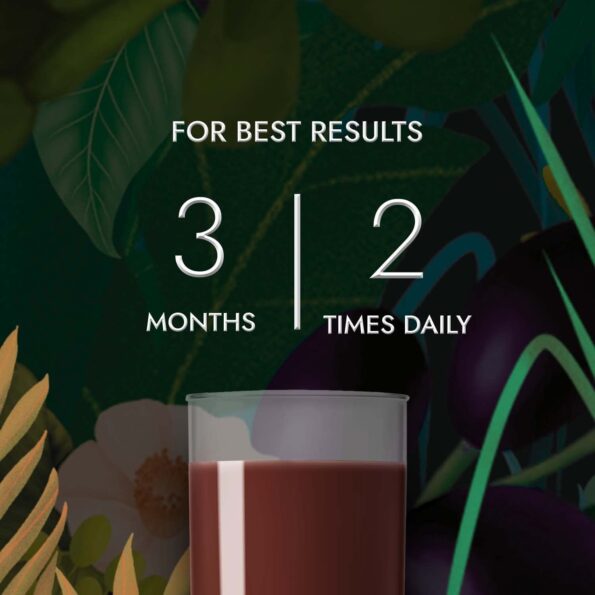
- Drink it on an empty stomach in the morning, and again about 30 minutes before dinner.
- Continue consistently for at least 8–12 weeks — Ayurvedic formulas work cumulatively, not instantly.
- Track your blood sugar readings (if you monitor them) so you and your doctor can see whether it’s actually making a measurable difference for you specifically.
A note on sensitive stomachs: a small number of people notice mild bloating in the first week or two, especially if taken on a truly empty stomach. If that happens, try it with a slightly larger water dilution.
6. Who It’s a Good Fit For — and Who Should Be Cautious
Likely a good fit if you:
- Have borderline or prediabetic blood sugar readings and want a natural addition to diet and exercise changes
- Are managing type 2 diabetes with your doctor’s involvement and want a sugar-free, low-calorie herbal add-on
- Prefer Ayurvedic or plant-based approaches and are comfortable with a several-month commitment
- Deal with diabetes-related fatigue or digestive discomfort alongside elevated blood sugar
Proceed with caution or skip if you:
- Are pregnant or breastfeeding — safety data for this specific population is limited
- Are on insulin or sulfonylurea medications, where combining with glucose-lowering herbs raises the risk of blood sugar dropping too low (hypoglycemia) without medical supervision
- Have a known allergy to any listed ingredient, particularly bitter gourd or amla
- Are looking for a fast fix rather than a gradual, several-month lifestyle addition
If any of the caution points apply to you, this is a “talk to your doctor first” product, not a “try it and see” one — that’s true of most things that interact with blood sugar.
7. Pros and Cons
| What We Like | Worth Knowing |
| ✓ 11-herb Ayurvedic blend (karela, jamun, amla, gudmar, giloy, methi and more) in one bottle | • Backed mainly by traditional use and one open-label brand-sponsored study, not large independent trials |
| ✓ No added sugar or artificial sweeteners — genuinely low-calorie | • Needs 2–3 months of consistent use before most people notice a meaningful shift |
| ✓ Simple twice-daily dosing that’s easy to build into a morning/evening routine | • Ships from India — delivery timelines and returns may differ for US buyers |
| ✓ Can be used alongside standard diabetes medication (with a doctor’s sign-off) | • Not a replacement for prescribed medication, insulin, or a diabetes-friendly diet |
| ✓ GMP-certified manufacturing and a widely recognizable Ayurvedic brand | • Mild bloating is possible in the first week or two for sensitive stomachs |
8. Common Mistakes People Make With Blood Sugar Juices
- Expecting overnight results — most people don’t see meaningful shifts until week 6–8 of consistent use.
- Stopping prescribed medication on their own because a natural product “feels like it’s working” — never do this without a doctor’s guidance.
- Skipping doses irregularly, which undermines the cumulative effect these herbal blends rely on.
- Ignoring diet and movement entirely and expecting the juice to compensate — it’s a support tool, not a substitute for the fundamentals.
- Not tracking blood sugar before starting, which makes it impossible to objectively tell if it’s actually helping you specifically.
9. Where to Get It
Kapiva sells Dia Free Juice directly through its official site, where you can also find full ingredient breakdowns, current pricing, and subscription options for the multi-month use the formula is designed around.
You can view current pricing and order directly here: Kapiva Dia Free Juice — Amazon
Buying from the official listing is the safest way to ensure you’re getting a genuine, correctly-stored batch — Ayurvedic herbal juices can lose potency if stored improperly, so third-party resellers are a bit more of a gamble.
10. Frequently Asked Questions
Q: Does Kapiva Dia Free Juice actually lower blood sugar?
A: Several of its core ingredients — bitter gourd, gudmar, and fenugreek in particular — have research behind glucose-related effects, and the brand’s own study reported improvements in fasting blood sugar and HbA1c over several months. That said, it’s based on smaller and brand-sponsored studies, so results vary by individual and it shouldn’t replace prescribed treatment.
Q: How long before I’d notice a difference?
A: Most users and the brand’s own guidance point to 6–12 weeks of consistent, twice-daily use before changes become noticeable — this is a cumulative herbal formula, not a fast-acting supplement.
Q: Can I take it with my diabetes medication?
A: It’s generally described as safe to use alongside standard diabetes medication, but combining any glucose-lowering herb with insulin or certain oral medications can increase the risk of blood sugar dropping too low. Always check with your doctor first.
Q: Are there any side effects?
A: It’s made from natural ingredients and is generally well tolerated, though some people experience mild bloating or stomach discomfort in the first week or two, especially on an empty stomach.
Q: Is it a substitute for a diabetes-friendly diet?
A: No. It’s designed as an addition to — not a replacement for — a balanced diet, regular movement, and any medication your doctor has prescribed. Herbal support works best alongside the fundamentals, not instead of them.
11. Final Verdict & Action Plan
Kapiva Dia Free Juice is a genuinely well-formulated Ayurvedic product — the ingredient list is specific, several herbs have real research behind their mechanisms, and the dosing guidance is clear. It’s not a miracle cure, and it shouldn’t be marketed or used as one, but as a doctor-approved complementary step, it’s a reasonable option.
If you’re considering it, here’s a simple way to start:
- Check your current fasting blood sugar so you have a real baseline to compare against.
- Talk to your doctor, especially if you’re on any glucose-lowering medication.
- Start the standard 30 ml twice-daily protocol and commit to at least 8 weeks before judging results.
- Keep your diet and activity level steady during that window so you can actually attribute any change to the juice itself.
- Reassess at 8–12 weeks with your doctor, using real numbers rather than how you “feel.”
Conclusion
Blood sugar management after 30 isn’t about chasing a single miracle product — it’s about stacking small, evidence-informed habits, and being honest about what each one can and can’t do. Kapiva Dia Free Juice earns a place on that list as a well-formulated, transparently-labeled option worth a conversation with your doctor, not a replacement for the basics.
If you decide to try it, go in with realistic expectations, track your numbers, and give the formula the consistent months it’s designed for.
| Medical Disclaimer This article is for informational purposes only and is not a substitute for professional medical advice, diagnosis, or treatment. Diabetes is a serious, individualized condition — never stop, reduce, or replace a prescribed medication based on this or any herbal product without first talking to your physician. Always consult a qualified healthcare provider before adding a new supplement to your routine, especially if you take blood-sugar-lowering medication or have an existing health condition. |
wellnessafter30.com — Real, honest guidance for a healthier you after 30.


